Films
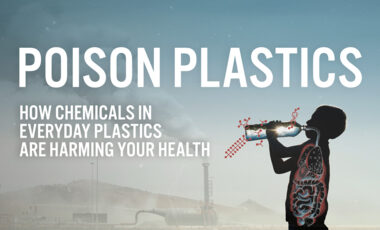
Poison Plastics: How chemicals in everyday plastics are harming your health
Every day, thousands of chemicals enter our bodies, many potentially high-risk, with almost no regulatory oversight standing in the way. Plastics contain 16,000 known chemicals, many found in everyday products. Yet 10,000 of them lack any hazard information at all. Where data does exist, it often points to serious health risks: cancer, infertility, cardiovascular disease, and more. Alarmingly, 83% of chemicals with available toxicity and exposure data are not regulated under any major international agreement. This film calls on governments and producers to reduce plastic production, especially single-use plastics and those with high toxicity and exposure risk; restrict or prohibit hazardous chemical groups; and ensure transparency and traceability across the full cycle of plastics.
Poison Plastics: How chemicals in everyday plastics are harming your health
Every day, thousands of chemicals enter our bodies, many potentially high-risk, with almost no regulatory oversight standing in the way.
Plastics contain 16,000 known chemicals, many found in everyday products. Yet 10,000 of them lack any hazard information at all. Where data does exist, it often points to serious health risks: cancer, infertility, cardiovascular disease, and more. Alarmingly, 83% of chemicals with available toxicity and exposure data are not regulated under any major international agreement.
This film calls on governments and producers to reduce plastic production, especially single-use plastics and those with high toxicity and exposure risk; restrict or prohibit hazardous chemical groups; and ensure transparency and traceability across the full cycle of plastics.
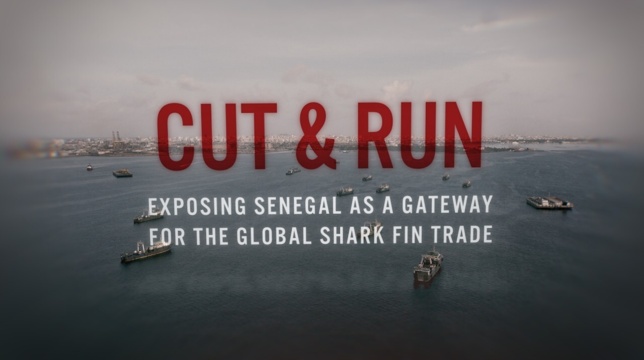
Cut & Run: Exposing Senegal as a gateway for the global shark fin trade
Tuna boats dock in Dakar by day. By night, illegal shark fins are smuggled ashore - and the world's seafood supply is funding it.
Senegal's port of Dakar is one of West Africa's busiest fishing hubs - and, a new EJF investigation reveals, a key gateway for the illegal global shark fin trade. Distant-water tuna longliners, many flagged to China and Taiwan, land their legal catch in daylight. But under cover of night, illegal shark fins are trafficked ashore, hidden among other cargo and, according to crew testimony, moved past inspectors with bribes.
'Cut & Run' draws on testimony from 87 Indonesian and Filipino crew members who spoke to EJF anonymously about the scale of the operation: sharks caught and finned on captain's orders, their bodies dumped at sea, their fins bound for lucrative markets in Asia. Dakar is a designated port under the Port State Measures Agreement, obligating Senegal to screen vessels and block illegal catch - obligations this investigation shows are being routinely evaded.
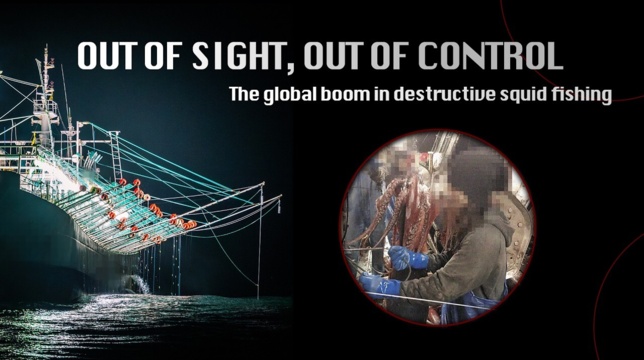
Out of Sight, Out of Control: The global boom in destructive squid fishing
EJF’s latest investigation into unregulated squid fishing on the high seas has uncovered illegal fishing and human rights abuses on a shocking scale.
Every year, hundreds of industrial fishing vessels disappear into some of the most remote and unregulated waters on earth, where they fish for squid beyond the reach of any law, any observer, and any accountability.
Over the last 5 years, EJF investigators have gathered testimony and footage from over 400 crew members who have worked on board distant water squid vessels. What they have documented is a system built on environmental destruction and forced labour. Rampant overfishing, the killing of protected species, and widespread human rights violations are endemic across the global squid industry.
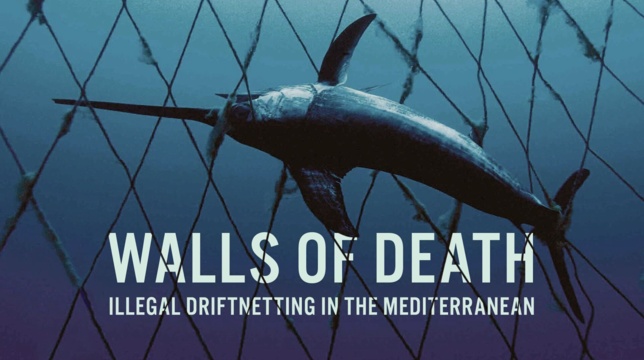
Walls of Death: Illegal Driftnetting in the Mediterranean
Among the most destructive fishing methods ever used, driftnets have been banned in the Mediterranean for decades - but EJF's latest investigation reveals they never really went away.
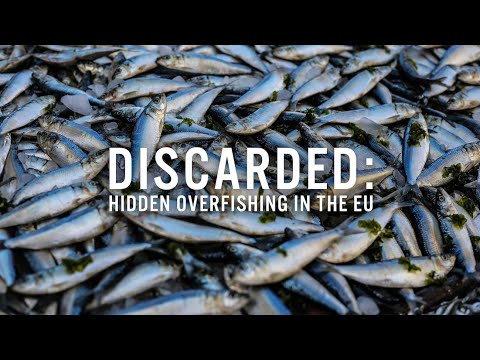
Discarded: Hidden Overfishing in the EU
In European waters, fish are caught and dumped at sea to make room for more valuable catch. This practice, known as highgrading, is illegal, but unfortunately most cases go unreported.
This extremely wasteful and unsustainable practice puts pressure on struggling ecosystems and harms honest fishers’ livelihoods. Transparency is the key to protecting these ecosystems and ending this widespread illegal practice.
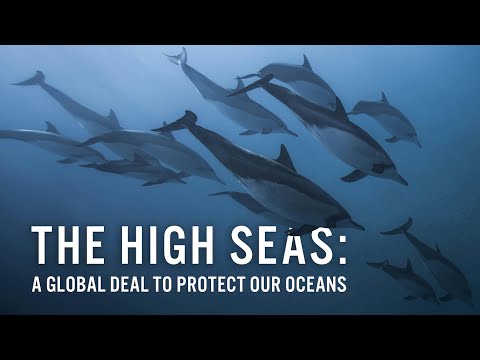
The High Seas: A Global Deal to Protect Our Oceans
The UN High Seas Treaty has entered into force, and we celebrate this exciting moment for ocean protection. It is evidence that a rules-based order can still deliver in the face of escalating environmental breakdown.

Before You Board: The Hidden Risks of Distant Water Fishing
Every year, thousands of Indonesians work as fishers on foreign boats, promised high wages for work abroad. However, the reality of life at sea can be very different from what is promised. Once onboard, fishers are routinely overworked, abused, and exploited.
Are you thinking of taking a job on a distant water fishing vessel? Watch out for these warning signs:
🚩 The recruitment agency doesn't have a valid licence or has a bad reputation. A company's SIUKAK/SIUPPAK permit can be found on the official Ministry of Transportation website, while its SIP3MI permit can be checked on the Ministry of KP2MI website.
🚩 The recruitment agency offers loans
Loans through banks or cash advances from companies are often used to pressure crew into accepting low salaries or prevent them from terminating their employment contracts.
🚩 Lack of transparency about salary
The recruitment agency receives crew's salary in advance before transferring it to their personal account. This creates an opportunity for companies to illegally "take a share" of crew's salary.
🚩 Retention of identity documents
Confiscation of passports, ID cards, family cards, and other personal documents controls migrant workers' movements while working.
🚩 Offered work on Chinese-flagged ships
Several human rights organisations have documented various human rights violations and allegations of forced labor against Indonesian migrant workers on Chinese-flagged ships.
(The footage used is illustrative and does not necessarily show the boats discussed by the fishers.)

The Forests of Life: How Mangroves Sustain Ghana's Fisheries, Coastline, and Climate – an EJF film
Mangroves sustain communities, shield coasts, and store vast amounts of carbon. In Ghana they are vanishing fast – but their protection is within reach through safeguarding, restoration, and community leadership.
In partnership with Hen Mpoano, watch our short documentary, which reveals how local action and stronger policy can revive these vital ecosystems.

Together we are strong: Liberia's fishmongers building fairer fisheries
Reports
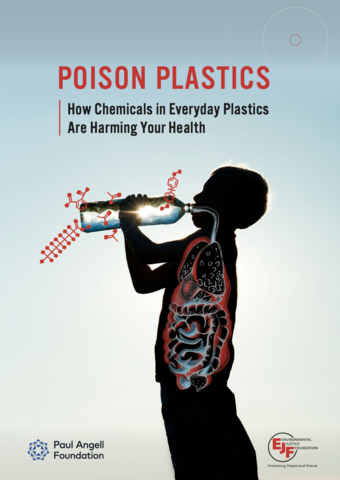
Poison Plastics: How chemicals in everyday plastics are harming your health
Plastics and the chemicals they contain have become deeply embedded in our lives within only a single generation. They are found in the vast majority of items we rely on every day – from food packaging and takeaway containers to clothing, furniture, hygiene products, infant feeding bottles and children’s toys. This report shares our novel analyses of the PlastChem data to shed light on the risks presented to human health by everyday items containing plastic-associated chemicals. The findings make the case for a world where the products we use every day are safe by design; today, they are not.
Plastics and the chemicals they contain have become deeply embedded in our lives within only a single generation. They are found in the vast majority of items we rely on every day – from food packaging and takeaway containers to clothing, furniture, hygiene products, infant feeding bottles and children’s toys.
This report shares our novel analyses of the PlastChem data to shed light on the risks presented to human health by everyday items containing plastic-associated chemicals. The findings make the case for a world where the products we use every day are safe by design; today, they are not.
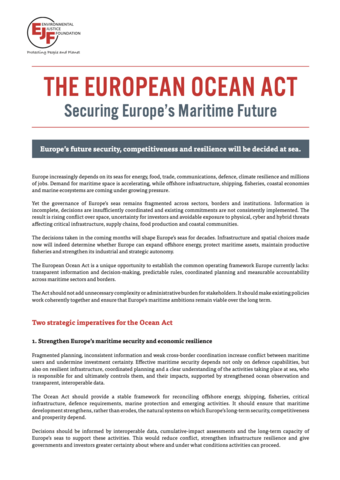
The European Ocean Act: Securing Europe’s Ocean Future: Europe’s future security, competitiveness and resilience will be decided at sea. The European Ocean Act is a unique opportunity to establish the common operating framework Europe currently lacks: transparent information and decision-making, predictable rules, coordinated planning and measurable accountability across maritime sectors and borders. This policy briefing lays out two strategic imperatives for the Ocean Act.
Europe’s future security, competitiveness and resilience will be decided at sea. The European Ocean Act is a unique opportunity to establish the common operating framework Europe currently lacks: transparent information and decision-making, predictable rules, coordinated planning and measurable accountability across maritime sectors and borders. This policy briefing lays out two strategic imperatives for the Ocean Act.
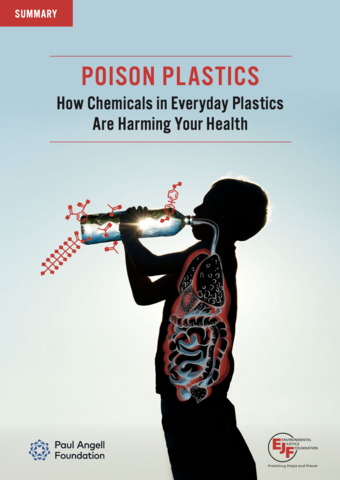
Poison Plastics: How chemicals in everyday plastics are harming your health - Report Summary: Plastics and the chemicals they contain have become deeply embedded in our lives within only a single generation. They are found in the vast majority of items we rely on every day – from food packaging and takeaway containers to clothing, furniture, hygiene products, infant feeding bottles and children’s toys. This summary of our full report shares our novel analyses of the PlastChem data to shed light on the risks presented to human health by everyday items containing plastic-associated chemicals. The findings make the case for a world where the products we use every day are safe by design; today, they are not.
Plastics and the chemicals they contain have become deeply embedded in our lives within only a single generation. They are found in the vast majority of items we rely on every day – from food packaging and takeaway containers to clothing, furniture, hygiene products, infant feeding bottles and children’s toys.
This summary of our full report shares our novel analyses of the PlastChem data to shed light on the risks presented to human health by everyday items containing plastic-associated chemicals. The findings make the case for a world where the products we use every day are safe by design; today, they are not.
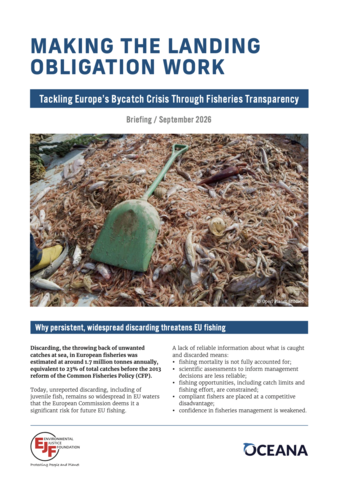
Making the Landing Obligation Work: Tackling Europe’s Bycatch Crisis Through Fisheries Transparency - Summary: The EU’s Landing Obligation (LO) is intended to reduce waste, encourage selective fishing and improve the catch information used to manage populations. For catches within the LO scope, fishers must retain, record and land catches, including bycatch, and count them against quota where applicable, subject to defined exemptions. More than a decade after the obligation was phased in, and seven years after it became fully applicable, these objectives have not been achieved. This is a summary of the longer briefing from EJF and Oceana, which provides a roadmap for ensuring the EU Landing Obligation’s full implementation.
The EU’s Landing Obligation (LO) is intended to reduce waste, encourage selective fishing and improve the catch information used to manage populations. For catches within the LO scope, fishers must retain, record and land catches, including bycatch, and count them against quota where applicable, subject to defined exemptions. More than a decade after the obligation was phased in, and seven years after it became fully applicable, these objectives have not been achieved.
This is a summary of the the longer briefing from EJF and Oceana, which provides a roadmap for ensuring the EU Landing Obligation’s full implementation.
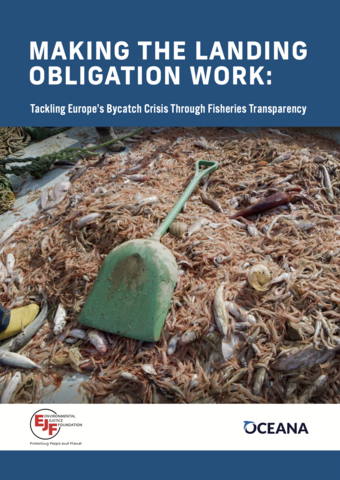
Making the Landing Obligation Work: Tackling Europe’s Bycatch Crisis Through Fisheries Transparency: The EU’s Landing Obligation (LO) is intended to reduce waste, encourage selective fishing and improve the catch information used to manage populations. For catches within the LO scope, fishers must retain, record and land catches, including bycatch, and count them against quota where applicable, subject to defined exemptions. More than a decade after the obligation was phased in, and seven years after it became fully applicable, these objectives have not been achieved. This briefing from EJF and Oceana provides a roadmap for ensuring the EU Landing Obligation’s full implementation.
The EU’s Landing Obligation (LO) is intended to reduce waste, encourage selective fishing and improve the catch information used to manage populations. For catches within the LO scope, fishers must retain, record and land catches, including bycatch, and count them against quota where applicable, subject to defined exemptions. More than a decade after the obligation was phased in, and seven years after it became fully applicable, these objectives have not been achieved.
This briefing from EJF and Oceana provides a roadmap for ensuring the EU Landing Obligation’s full implementation.
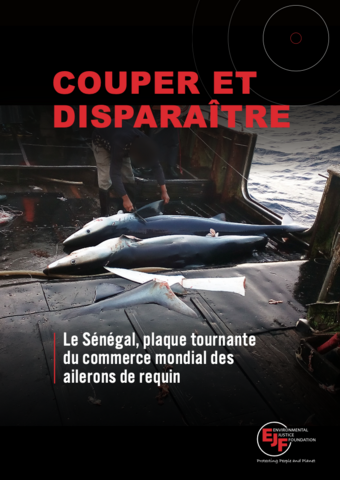
Couper et disparaître: le Sénégal, plaque tournante du commerce mondial des ailerons de requin: Ce rapport met au jour l’ampleur de l’aileronnage des requins à bord de thoniers chinois et taïwanais faisant escale à Dakar, principal port de pêche du Sénégal. S’appuyant sur les témoignages de pêcheurs ayant observé ces pratiques, il révèle que des ailerons de requins étaient régulièrement débarqués à Dakar, où les contrôles portuaires faisaient défaut. Le rapport met également en évidence le risque que du thon issu de navires pratiquant l’aileronnage des requins alimente les chaînes d’approvisionnement mondiales. Le commerce des ailerons de requins reste possible en raison de ces failles de contrôle, qui doivent être comblées de toute urgence.
Ce rapport met au jour l’ampleur de l’aileronnage des requins à bord de thoniers chinois et taïwanais faisant escale à Dakar, principal port de pêche du Sénégal.
S’appuyant sur les témoignages de pêcheurs ayant observé ces pratiques, il révèle que des ailerons de requins étaient régulièrement débarqués à Dakar, où les contrôles portuaires faisaient défaut. Le rapport met également en évidence le risque que du thon issu de navires pratiquant l’aileronnage des requins alimente les chaînes d’approvisionnement mondiales.
Le commerce des ailerons de requins reste possible en raison de ces failles de contrôle, qui doivent être comblées de toute urgence.
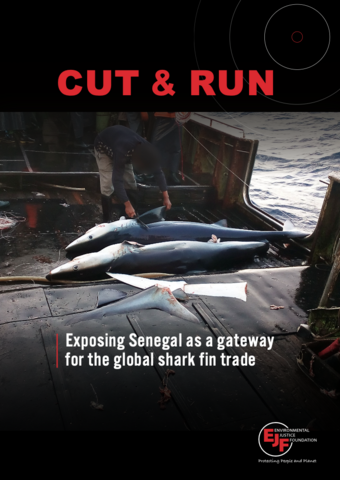
Cut & Run: Exposing Senegal as a gateway for the global shark fin trade: This report reveals extensive shark finning on board Chinese and Taiwanese-owned tuna vessels that call at Dakar, Senegal's main fishing port. Drawing on first-hand testimony from fishers who witnessed this cruel and often illegal practice, the report exposes how fins were routinely landed in Dakar, with enforcement at the port easily evaded or non-existent. It also reveals the high risk of tuna linked to shark finning entering global supply chains. Without urgent action from Senegal and international regulators to close these loopholes, the trade of shark fins will continue unchecked.
This report reveals extensive shark finning on board Chinese and Taiwanese-owned tuna vessels that call at Dakar, Senegal's main fishing port. Drawing on first-hand testimony from fishers who witnessed this cruel and often illegal practice, the report exposes how fins were routinely landed in Dakar, with enforcement at the port easily evaded or non-existent. It also reveals the high risk of tuna linked to shark finning entering global supply chains. Without urgent action from Senegal and international regulators to close these loopholes, the trade of shark fins will continue unchecked.