Building on a legacy of leadership, Vision 2040 strengthens the EU’s zero-tolerance stance on illegal fishing
On 20 October, the European Commission presented its strategy for fisheries external action, alongside its Vision 2040 for EU fisheries and aquaculture. For the EU IUU Fishing Coalition, the message at its heart is the right one: the EU will take a zero-tolerance approach to illegal, unreported and unregulated (IUU) fishing, with transparency as its core pillar.
The EU IUU Fishing Coalition applauds the ambition of the European Commission’s strategy. We now need it to live up to that promise and for the Commission to deliver on its commitments.
Bringing ownership out of the shadows
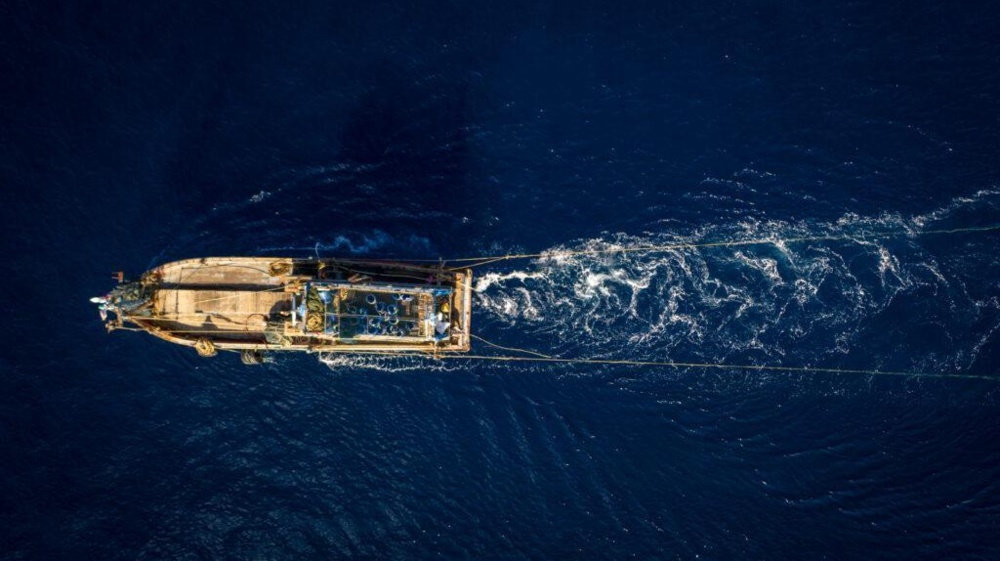
For years, the EU IUU Fishing Coalition and its member organisations have advocated for greater transparency in Europe’s fisheries sector, highlighting how hidden beneficial ownership information is the lifeblood of IUU fishing. Illicit actors often hide behind shell companies, operate under so-called ‘flags of convenience’ and move catch between vessels at sea, all to escape the rules that bind everyone else. How can anyone be held accountable when they operate in the dark?
The new EU strategy recognises this, stating that the pillars of global fisheries governance are “fundamentally weakened” by gaps around transhipment, flags of convenience and ultimate beneficial ownership. It commits the Commission to:
Assess gaps in ultimate beneficial ownership when authorising EU vessels to fish outside EU waters, and improve the availability of beneficial ownership information in European and national registers; including within its evaluation of the Regulation on sustainable management of the external fishing fleet, also known as the ‘SMEFF’ Regulation;
Support Member States in identifying ownership links between EU nationals and foreign-flagged vessels, particularly vessels registered under flags of convenience that pose a high risk of IUU fishing;
Consider extending transparency and IUU fishing-prevention rules to joint ventures partly owned by EU companies or nationals;
Advance concrete measures on open registers acting as flags of convenience;
Bring fisheries, customs, port and tax authorities together, using information from anti-money laundering and tax frameworks to target high-risk products.
Several of these echo what the Coalition called for in June 2026 on the International Day for the Fight Against IUU Fishing, starting with formally recognising transparency as a foundational pillar of that fight.
“For too long, EU-owned fishing vessels operating under non-EU flags, including flags of convenience, have operated without meaningful scrutiny. A loophole that allows profits from potentially illegal fishing to flow back into the EU. We welcome the European Commission’s commitment to closing this gap, but commitments must now be translated into action. Member States need to require their citizens to notify foreign vessel ownership and this information should be shared in an EU-wide register. We welcome the proposal to prevent illegal fishing by EU-owned vessels flagged to non-EU countries, as some of these vessels undermine the efforts of EU-flagged vessels to fish sustainably. A different flag should not be a licence to evade accountability.”
→ Vanya Vulperhorst, Head of Campaigns at Oceana in Europe
“EJF applauds the leadership shown by Commissioner Kadis, his team and the European Commission. On the launch of the strategy for fisheries external action, we praise its recognition of transparency as a core pillar in the fight against IUU fishing. Opacity in fisheries ownership is a structural enabler of illegal activities. The commitments made to tackle this issue through assessing how ultimate beneficial ownership information can be collected, and improving the availability of this information in relevant registers and databases, clearly show the Commission’s willingness to bring ownership out of the shadows. We look forward to supporting the Commission’s commitments in action.”
→ Julien Daudu, Brussels Chief Representative at Environmental Justice Foundation
Closing the EU market to IUU fishing products
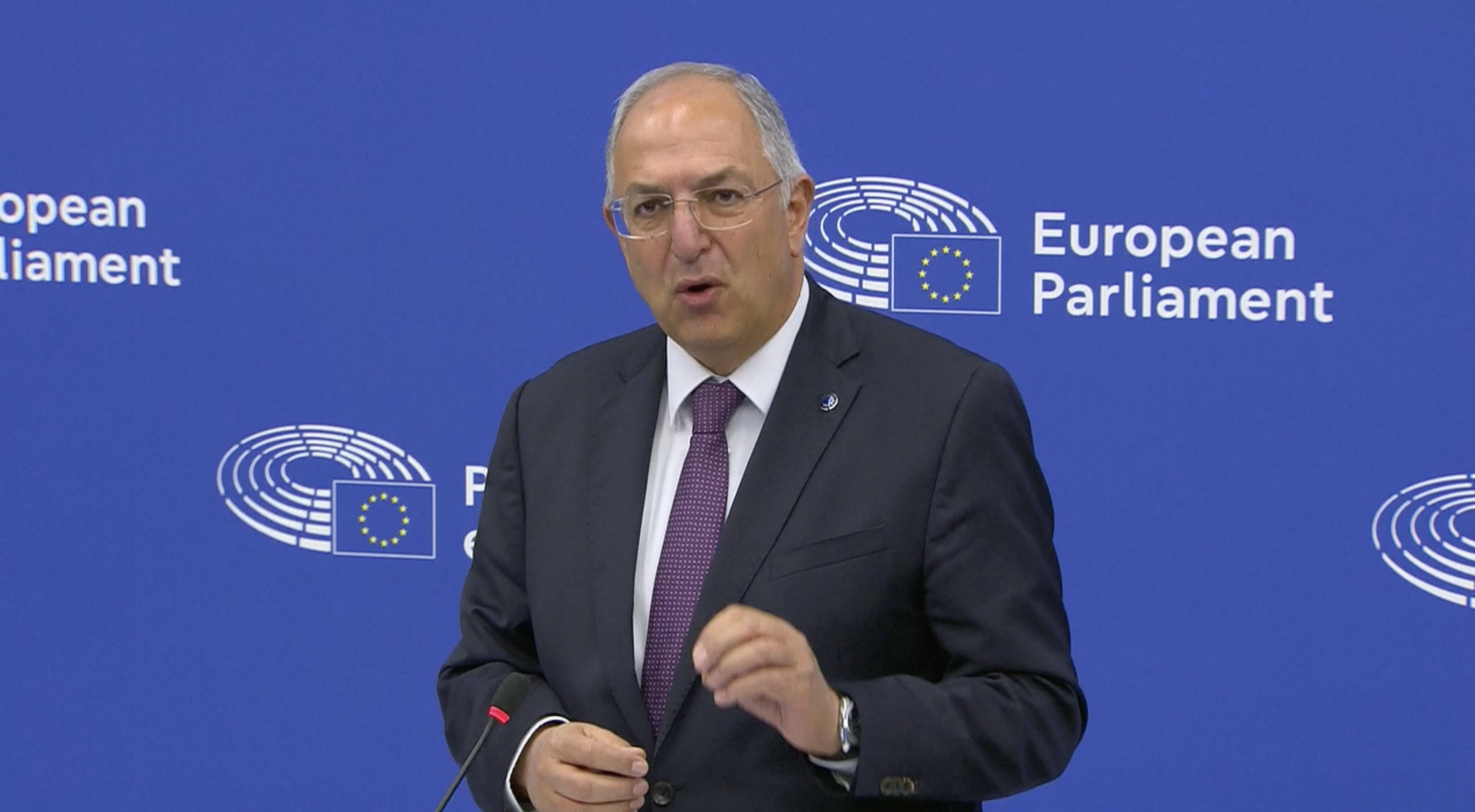
“We need stronger EU external action that supports sustainability and a level playing field,” Commissioner for Fisheries and Oceans Costas Kadis said when presenting the Vision 2040 package. A few things undermine a level playing field for the EU fishing fleet more than IUU fishing. Operators who fish illegally cut costs by ignoring catch limits, controls and labour rules, undercutting fishers and businesses that play by the rules, in Europe and beyond.
This is where zero tolerance begins: Member States and the European Commission are to apply the EU IUU Regulation in full, both domestically and externally, backed by tighter customs and port controls, an emphasis on the IUU dialogues (‘carding’) and a firmed commitment to the EU’s digital catch certificate system, CATCH. It is a shift the Coalition has long pushed for, welcoming the launch of CATCH in January this year, as the most effective tool to address persistent poor implementation of import control by many of the Member States. We also applaud the affirmation from the European Commission to apply digital traceability to all products along the supply chain by 2029, including for EU products and imports.
Where dialogue with supplying countries fails, the EU “will not hesitate to close its market”, as the Commission states in the strategy. By joining forces with like-minded major markets, it aims to leave IUU fishing products with nowhere to go. For that to work, catch documentation schemes in major markets must be interoperable, utilising tools and technology like on-the-water electronic monitoring, so that a consignment rejected in one market cannot easily be sold in another. The Coalition’s Fisheries Import Control Scheme Handbook, published in November 2025, sets out how strong import controls can close the net and how the EU’s system should be replicated in other major seafood markets.
“Consumers have the right to know what is on their plates, where their seafood comes from and how it is caught. It is encouraging to see the Commission showing political leadership on traceability, reinforcing its commitment to ensure that all seafood products, including processed products and imports, are digitally traceable by 2029. The priority now is to turn this commitment into reality, ensuring the same level of transparency for all seafood sold in the EU.”
→ Dr Antonia Leroy, Head of Ocean Policy at WWF for Nature European Policy Office
Improving transparency at sea and data collection
“Emerging technologies offer new opportunities for monitoring ecosystems and support more informed management decisions. Increased use of technologies makes management measures more effective…including through electronic monitoring.”
The Vision sets out the EU’s clear commitment to scaling electronic monitoring technology to improve fisheries transparency and enhance ecological and socio-economic resilience across large-scale fisheries. Electronic monitoring provides detailed data on fishing effort, catch composition, bycatch of non-target species and adherence to environmental and social commitments while at sea. Electronic monitoring also drives consumer confidence that seafood products have been harvested legally, sustainably and without labour abuses - especially when industry is involved throughout the entire stakeholder process. The EU is beginning to show more leadership in this space, via the revised EU Fisheries Control Regulation and now commitment through the Vision 2040 for fisheries and aquaculture, but implementation is key. As emphasised in the Vision, advancing and scaling electronic monitoring will be pivotal for the future of EU fisheries. We recommend a robust scope for the vessels required to carry Electronic Monitoring (EM) as of 2028; continued exploration of EM use on both EU fleets as well as those importing to the EU, while ensuring interoperability with tCATCH; and investment in EDGE AI technology to complement EM with near-real-time data on fishing activities.
“The Vision for 2040 makes clear the pivotal role electronic monitoring will play in sustainable fisheries management and combatting IUU fishing both in the EU and internationally. Now, the EU must set robust standards for on-the-water monitoring and electronic monitoring implementation, and show leadership in fisheries transparency and first-mile verification.”
→ Emily Langley, Fisheries Policy Advisor at The Nature Conservancy
International leadership and cooperation in the fight against IUU fishing
The strategy also reflects several priorities the Coalition has long advocated for, from turning commitments on the FAO Global Record into action to making EU fisheries partnerships more transparent, equitable and sustainable. More broadly, the EU commits to ensuring that its participation in regional fisheries management organisations (RFMOs), trade arrangements and the fight against IUU fishing are mutually reinforcing. Through targeted diplomacy and its anti-IUU fishing framework, the EU aims to incentivise compliance with international obligations, including in respect of labour standards. The strategy commits the EU to:
Further developing partnerships with non-EU countries and alliances with like-minded countries. This includes building on existing efforts such as the 2026 G7 statement on IUU fishing, and aims to promote sustainable fisheries management and strengthen cooperation on fisheries governance in a changing geopolitical context.
Strengthening flag State responsibilities and accountability by ensuring greater transparency over which vessels are authorised to fish, what they can catch, where and when. This includes maintaining accurate fleet registers, strengthening vessel monitoring and ensuring flag States effectively control their vessels, including when operating on the high seas.
Improving the effectiveness of RFMOs by enhancing monitoring, control and surveillance (MCS), transparency and compliance, including on beneficial ownership, more effective implementation of conservation measures and information sharing, while addressing gaps in RFMO coverage on the high seas.
Promoting effective implementation of FAO instruments to combat IUU fishing, particularly the Port State Measures Agreement (PSMA), and strengthening global information-sharing through the FAO Global Record of Fishing Vessels (Global Record) and the PSMA Global Information Exchange System (GIES), including the regular updating of vessel information and exchange of port inspection reports and port denials.
Promoting the development and use of electronic tools, and the transmission and sharing of these data, using international standards (UN/FLUX) and supporting the modernisation of data exchange in RFMOs and developing countries.
Leveraging EU trade agreements to promote sustainable fisheries, including through stronger implementation of fisheries sustainability commitments under existing Free Trade Agreements and upgrading relevant provisions when agreements are modernised.
Ensuring that the Sustainable Fisheries Partnership Agreements (SFPAs) are fully integrated into the EU’s broader external policies, systematically addressing cross-cutting issues including combating IUU fishing and improving enforcement of their non-discrimination and transparency clauses, so that EU and other international operators compete on an even level playing field, while, putting greater transparency and accountability at the core of SFPAs and seeking to expand beneficial ownership transparency, supporting partner countries in this endeavour.
From a strategy to concrete delivery
If zero tolerance is the goal, the intentions set out in the EU’s strategy must now translate into Member State implementation and Commission enforcement. The Coalition calls on the Commission to:
Publicly endorse the Global Charter for Fisheries Transparency, ahead of Our Ocean 2027, further demonstrating the EU’s commitment to transparency on the global stage.
Ensure Member States collect beneficial ownership information of both EU-flagged and EU-owned vessels and provide the technical and legal support on the collection of this information and its inclusion within national and EU-wide registers.
Require through the SMEFF Regulation’s Annex that all vessels authorised to fish under this Regulation provide the Commission with beneficial ownership information.
Require Member States to include standardised beneficial ownership information for all EU-flagged vessels in the Union Fleet Register.
Encourage and support Member States to submit complete, timely beneficial ownership information for their vessels to the FAO Global Record of Fishing Vessels and relevant RFMOs, and use international fora to encourage partner countries to do the same.
Formally clarify via Commission guidance, with a firm timeline, that Member States must collect information on nationals with ownership interests (including as beneficial owners) in non EU-flagged vessels to adequately enforce Articles 38(10), 39 and 40 of the IUU Regulation; and restart the Working Group on Nationals with Member States.
Analyse how to restrict or prohibit EU nationals and companies from owning fishing vessels flagged to flags of convenience (FoC). This could entail identifying and publishing an official EU list of FoC countries and aligning it with existing EU listings on IUU fishing, anti-money laundering, and tax non-cooperation.
Ensure the full and effective roll-out of electronic monitoring on eligible EU fishing vessels under the Fisheries Control Regulation.
Use existing dialogues, including the EU carding scheme, to push for greater transparency in international fisheries.
Reinforce the EU’s carding scheme by ensuring consistent, transparent and timely enforcement supported by adequate allocation of human resources.
Continue to encourage the direct use of CATCH by non-EU countries, reducing the administrative burden on EU importers.
Encourage non-EU countries to establish interoperability with CATCH.
Leverage preferential trade arrangements, such as the Generalised Scheme of Preferences (GSP/GSP+), to strengthen the fight against IUU fishing and promote sustainable fisheries, including through enhanced monitoring and dialogue with beneficiary countries and integration of fisheries-related international instruments.
→ Nikolas Evangelides, who manages The Pew Charitable Trusts’ engagement with the European Union to address illegal fishing, said:
“Flag States are responsible for ensuring their vessels are properly authorised, monitored, and controled wherever they operate, including on the high seas. The EU’s commitment to closing governance gaps in these large ocean areas is an important step forward and could eliminate loopholes that allow unregulated or poorly regulated fishing. Now, it must work with international partners and through its Member States to turn that ambition into concrete action and ensure no fishing vessel operates without effective oversight.”
As Commissioner Kadis put it in the Commission’s press conference, “our destination is 2040, but the decisions that will determine whether we get there start today.” The same is true for the fight against IUU fishing.
The EU is one of the world's largest seafood markets, and its choices shape fisheries far beyond its waters. With its IUU Regulation, the EU has long led the global fight against IUU fishing, from the carding system to the launch of CATCH this year. The new strategy draws the map to 2040. Now it's time to build that road. The EU IUU Fishing Coalition stands ready to build it together with the European Commission and Member States.
The EU IUU Fishing Coalition brings together the Environmental Justice Foundation (EJF), Oceana, The Pew Charitable Trusts, The Nature Conservancy (TNC) and World Wildlife Fund (WWF) European Policy Office.
SIGN UP FOR OUR EMAILS AND STAY UP TO DATE WITH EJF