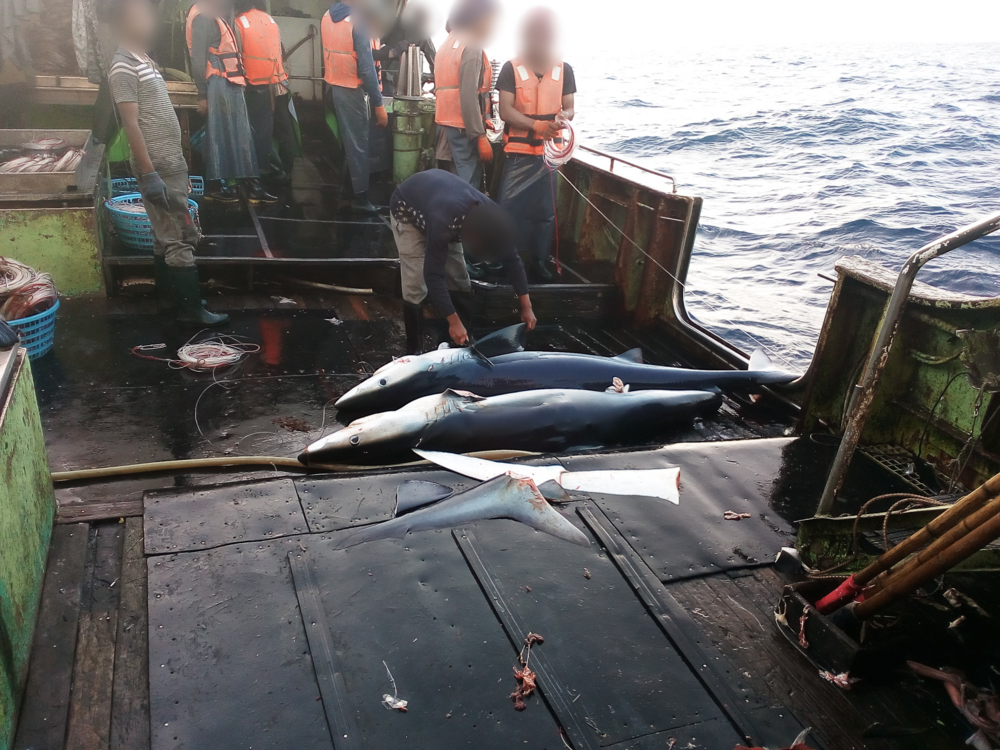
Illegal shark finning relies on Dakar as a transit hub, a new investigation reveals
An investigation by the Environmental Justice Foundation (EJF), documented in a new film, has uncovered widespread evidence of illegal shark finning linked to distant-water tuna vessels using the port of Dakar, exposing serious failures in fisheries oversight that allow illegally sourced seafood to enter international markets.
Drawing on interviews with 124 fishers who worked aboard Chinese and Taiwanese-owned tuna longliners between 2020 and 2026, EJF found that the majority reported witnessing shark finning, the cruel, painful and illegal practice of removing a shark's fins before discarding it at sea. The sharks are sometimes still alive, meaning they slowly suffocate as they are unable to swim. The film features several of these first-hand testimonies, drawn directly from the fishers who witnessed the practice at sea.
The investigation links these accounts to dozens of vessels operating through Dakar, one of Africa's busiest fishing ports and a major hub for distant-water fleets operating in the Atlantic.
47 fishers, who had worked across 24 vessels, said shark fins were landed in Dakar, either directly or after being transferred at sea to carrier vessels. Interviewees described systematic attempts to conceal illegal activity, including hiding fins on board, dumping evidence before inspections, unloading fins under the cover of darkness, and confiscating crew members' mobile phones to delete photographs and videos.
The findings raise serious concerns about the effectiveness of port controls. Senegal is a party to the Port State Measures Agreement, designed to prevent illegally caught seafood from entering global markets, yet fishers consistently reported little or no meaningful inspection of shark fin landings.
Sharks are among the ocean's most threatened animals. An estimated 80 to 100 million are killed through fishing every year, while around 70% of pelagic shark species are now threatened with extinction. Their loss threatens the health of marine ecosystems and, ultimately, the sustainability of fisheries that millions of people rely upon for food and livelihoods.
Steve Trent, CEO and Founder of the Environmental Justice Foundation, said:
"When fishing vessels can land products without effective scrutiny, illegal shark finning becomes easier to hide and harder to stop. Sharks play an essential role in maintaining healthy oceans. Protecting them is fundamental to sustainable fisheries, food security and the future of coastal communities.
The solutions already exist. Stronger port inspections and full implementation of the Global Charter for Fisheries Transparency would make it far harder for illegal fishing to remain hidden and help ensure that seafood reaching global markets is legal, sustainable and ethical."
The investigation, and the film that accompanies it, also highlights the international reach of seafood landed through Dakar. More than 1,800 tonnes of tuna and tuna-like products were exported directly from Senegal to Japan in 2024. Processing companies in Thailand and Singapore also imported tuna landed in Dakar before exporting products to markets including the European Union, South Korea and the United States, raising concerns that seafood linked to vessels implicated in shark finning may be entering global supply chains.
EJF is calling on Senegal to strengthen inspections of high-risk fishing vessels, adopt a mandatory "fins naturally attached" policy for all sharks landed in its ports, and fully implement its obligations under international fisheries agreements. The organisation also urges regional fisheries management organisations, flag states, and major seafood markets to strengthen monitoring and implement the Global Charter for Fisheries Transparency to help eliminate illegal fishing and protect vulnerable marine wildlife.
ENDS
Notes to editors
The report in English is available here, and in French here.
The film in both languages is available here.
About EJF
Our work to secure environmental justice aims to protect our global climate, ocean, forests, wetlands, wildlife and defend the fundamental human right to a secure natural environment, recognising that all other rights are contingent on this. EJF works internationally to inform policy and drive systemic, durable reforms to protect our environment and defend human rights. We investigate and expose abuses and support environmental defenders, Indigenous peoples, communities, and independent journalists on the frontlines of environmental injustice. Our campaigns aim to secure peaceful, equitable and sustainable futures. Our investigators, researchers, filmmakers, and campaigners work with grassroots partners and environmental defenders across the globe. For more information or to speak to one of our staff, please contact media@ejfoundation.org.
SIGN UP FOR OUR EMAILS AND STAY UP TO DATE WITH EJF