Lula’s re-election keeps Brazil’s environmental progress alive, but the fight for nature, Indigenous rights and democracy is not over
On Sunday 25 October, Brazil made a decisive choice about its political future. After three weeks of intense mobilisation in the streets and across social media, Luiz Inácio Lula da Silva won re-election in a deeply polarised and fiercely contested presidential run-off against Flávio Bolsonaro, son of former president Jair Bolsonaro.
The result keeps open an opportunity to continue rebuilding Brazil’s environmental governance and defending the democratic institutions on which public accountability depends. It also rejects the immediate prospect of a return to the political project associated with Jair Bolsonaro’s presidency, a period marked by rising Amazon deforestation, weakened environmental enforcement and escalating threats to Indigenous peoples.
Yet this election was not a mandate for complacency. Nearly half the electorate supported an alternative political project, reflecting the depth of Brazil’s divisions. The new administration must show that environmental protection, climate action and democratic dialogue can deliver tangible benefits to communities across the country.
For the international environmental community, the result offers an opportunity to consolidate progress, not a guarantee of it. It does not remove the urgency of the challenges ahead.
An election shaped by post-truth politics
Brazil’s election unfolded in an increasingly hostile information environment, in which disinformation, algorithmic amplification and declining trust in public institutions put democratic processes under growing strain.
Technology platforms held extraordinary influence over that environment. When Meta was accused of treating the two campaigns unequally, it blamed technical errors, but Brazil’s Superior Electoral Court still ordered it to guarantee equal treatment of the candidates.
Whatever the cause, the episode demonstrated that opaque decisions made by private technology companies can have real consequences for public debate and electoral fairness. Without transparency, there can be no accountability.
The election also took place amid sustained tensions between political actors and Brazil’s judicial institutions. Those institutions have held, but the challenges exposed during the campaign will not disappear with the result. Democratic resilience requires transparency, independent institutions, access to reliable information and respect for the legitimacy of political disagreement.
An opportunity to consolidate environmental progress
Lula’s re-election allows Brazil to continue rebuilding environmental governance and strengthening its international climate leadership. But the new administration must translate that promise into durable public policy, as strong in practice as it is on paper.
The record provides grounds for cautious optimism. According to Brazil’s National Institute for Space Research (INPE), Amazon deforestation fell to an estimated 3,335 square kilometres in the 12 months to July 2026, a 41.8% reduction compared with the previous period and the lowest rate in the monitoring series that began in 1988. Deforestation in the Cerrado also fell by 23.8%, reaching its lowest recorded rate since monitoring began in 2001.
These figures show that political will, stronger enforcement and renewed environmental policy can produce measurable results. They also demonstrate why environmental governance must be treated as a long-term public responsibility, not a temporary political priority.
But reductions in deforestation are progress, not a solution. Illegal land clearing, fires, degradation, pressure on Indigenous territories and the effects of climate change remain serious threats. The administration must ensure that recent progress is sustained across all Brazilian biomes, not only in the Amazon.
The election result also opens the way to accelerate progress on the recognition of Indigenous territorial rights and the protection of communities facing illegal mining, land grabbing and violence.
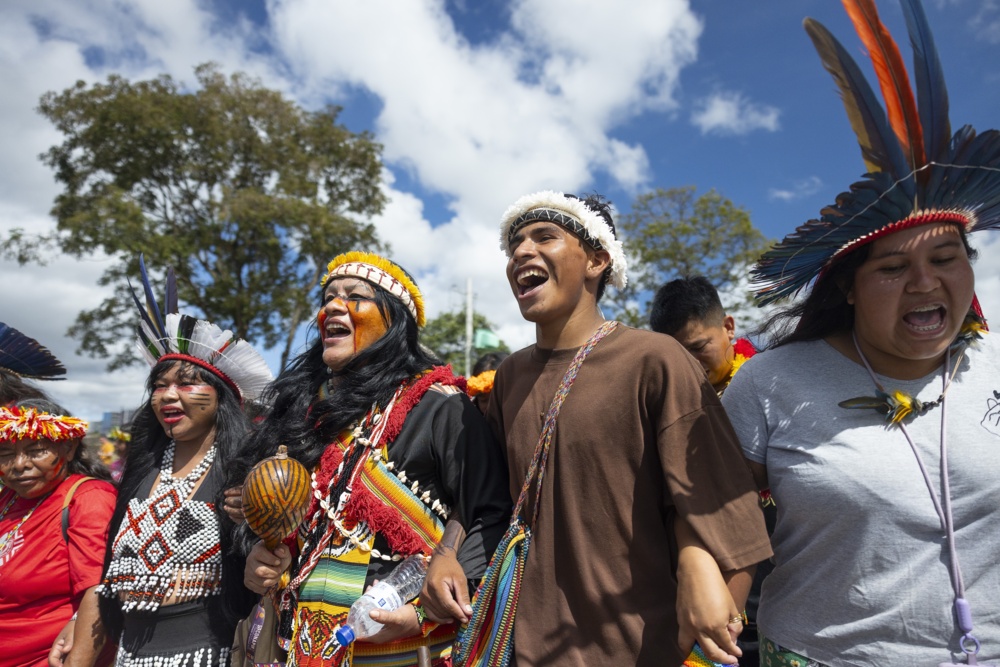
Indigenous peoples are not merely beneficiaries of environmental policy. Their knowledge, governance systems and territorial stewardship are essential to the conservation of Brazil’s ecosystems. A credible environmental agenda must therefore be built with Indigenous peoples and traditional communities, not simply designed for them.
The Pantanal must become a national priority
For the Pantanal, the world’s largest tropical wetland, the stakes are particularly high.
In 2020, fires burned approximately 30% of the biome. A scientific study published in Scientific Reports estimated that almost 17 million vertebrates were killed directly by the fires. The catastrophe exposed the vulnerability of a wetland whose ecological health depends on interconnected rivers, seasonal flooding, native vegetation and the livelihoods of traditional communities.
The Pantanal cannot be protected through emergency firefighting alone. It requires integrated fire management, year-round prevention, restoration of degraded areas, protection of water flows and sustained support for Indigenous peoples and traditional communities.
Lula’s new government must make wetland protection a central component of Brazil’s climate strategy. This means recognising wetlands as critical carbon stores and biodiversity reservoirs, strengthening the scientific evidence used in decision-making and securing long-term funding for conservation and restoration.
Brazil also has an opportunity to demonstrate international leadership by placing wetlands more firmly within global climate finance, biodiversity policy and cooperation between countries. Its diplomacy must be matched by implementation at home, where the ecological future of the Pantanal and other wetlands depends on decisions taken across multiple levels of government.
Climate leadership must be matched by domestic consistency
Lula’s re-election also carries international responsibilities. Brazil has sought to strengthen its position in global climate diplomacy, and its recent deforestation reductions have reinforced its credibility.
Yet a government’s environmental record must be assessed as a whole. Controversies over fossil-fuel expansion, infrastructure projects and environmental licensing demonstrate that progress in one area does not eliminate contradictions in another.
The administration must ensure that decisions on energy, transport, agriculture and infrastructure are consistent with its climate commitments. This includes transparent environmental assessment, meaningful consultation with affected communities and the protection of ecologically sensitive landscapes.
International climate leadership is not measured only by speeches at summits or commitments in national plans. It is measured by the decisions that governments take when economic interests conflict with environmental limits.
International solidarity in an era of political fragmentation and environmental destruction
At a time when political priorities across much of Latin America are shifting to the right, Brazil risks becoming an increasingly isolated voice for social and environmental progress in the region. Continued support from international institutions, partner governments and multilateral organisations will be essential to sustaining its environmental ambitions, mobilising the finance needed to protect its ecosystems and ensuring that democratic and environmental progress can withstand political headwinds.
The stakes could hardly be higher. Climate change recognises no borders, and neither does biodiversity loss. The fate of the Amazon, the Pantanal and Brazil’s other extraordinary ecosystems is inseparable from the future of the global climate, the survival of countless species and the wellbeing of present and future generations. Protecting these landscapes is not simply a national responsibility; it is a global imperative.
Brazil’s struggle to protect nature is, ultimately, a struggle to protect the conditions that make life on Earth possible. Lula’s victory has kept that possibility alive, but its promise will only be fulfilled through sustained action at home and genuine solidarity abroad. At a time when political alliances may shift and international cooperation is under strain, the world must recognise that standing alongside Brazil in the defence of its natural heritage is not an act of charity or political alignment. It is an investment in our shared future, and in the communities whose lives and livelihoods depend on these ecosystems. The climate crisis is global, the responsibility is collective, and the consequences of failure will be shared by us all.
SIGN UP FOR OUR EMAILS AND STAY UP TO DATE WITH EJF

