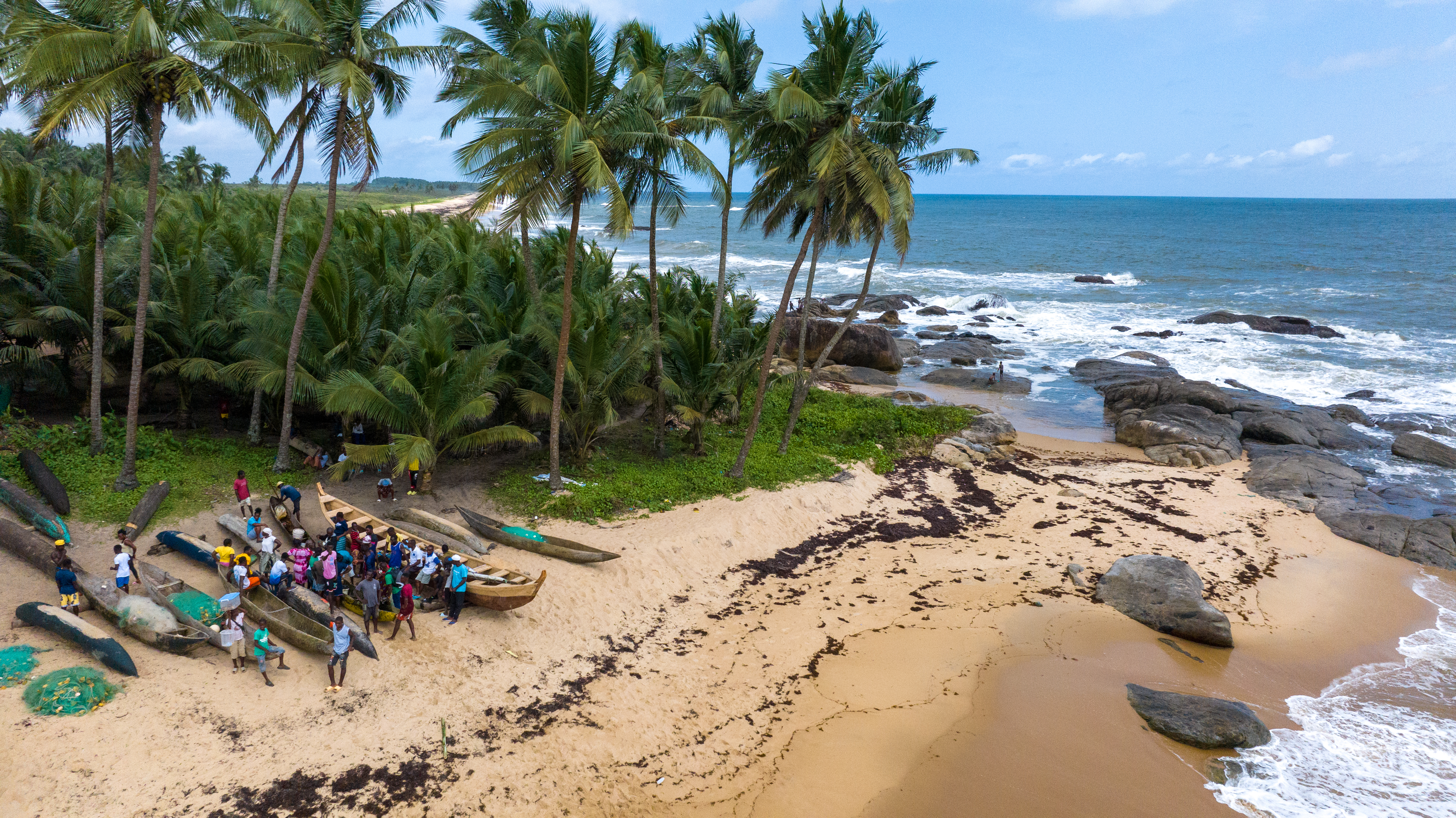
Grand Kru County in southeast Liberia covers approximately 3,895 square kilometres. It is one of the country’s least populated counties, home to 109,342 people, according to Liberia’s 2022 census. There are 25 fishing communities in Grand Kru, largely inhabited by the Kru and Fanti ethnic groups. For generations, these coastal communities have depended on the ocean. The men fish in wooden canoes, while the women smoke, dry and sell the catch in small markets. The laws protecting sea turtles were unknown; sea turtles, and their eggs, were routinely caught, consumed, or sold in markets alongside other seafood.
A Turning Point
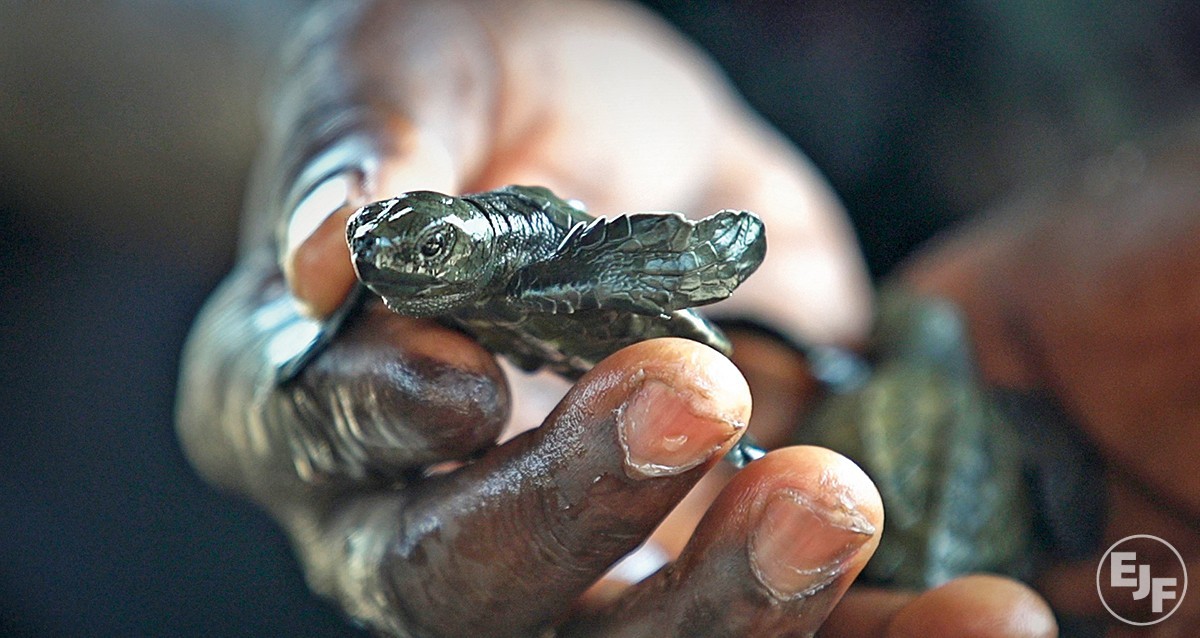
In 2018, the Environmental Justice Foundation (EJF) began working with five fishing communities in Grand Kru County to protect endangered marine species. The beaches of Grand Kru are among the most important nesting sites for sea turtles in Liberia. They host several threatened sea turtles: Hawksbill, Green turtle, Leatherback, Olive ridley, and Loggerhead.
Through EJF's engagement with the communities, explaining the critical role sea turtles play in maintaining healthy marine ecosystems to safeguard Liberia’s future fisheries, several community members, including some turtle poachers, began to change their views.
With their support, EJF then launched an awareness campaign across the five communities, amplifying the importance of sea turtle conservation. Local leaders, youth groups, and fishers participated by holding town hall meetings and making house-to-house visits, using simple Liberian English. EJF used flyers during the community discussions to explain the role sea turtles play in the ocean, including eating jellyfish to keep their populations down and protecting the long-term sustainability of coastal livelihoods.
From poachers to protectors
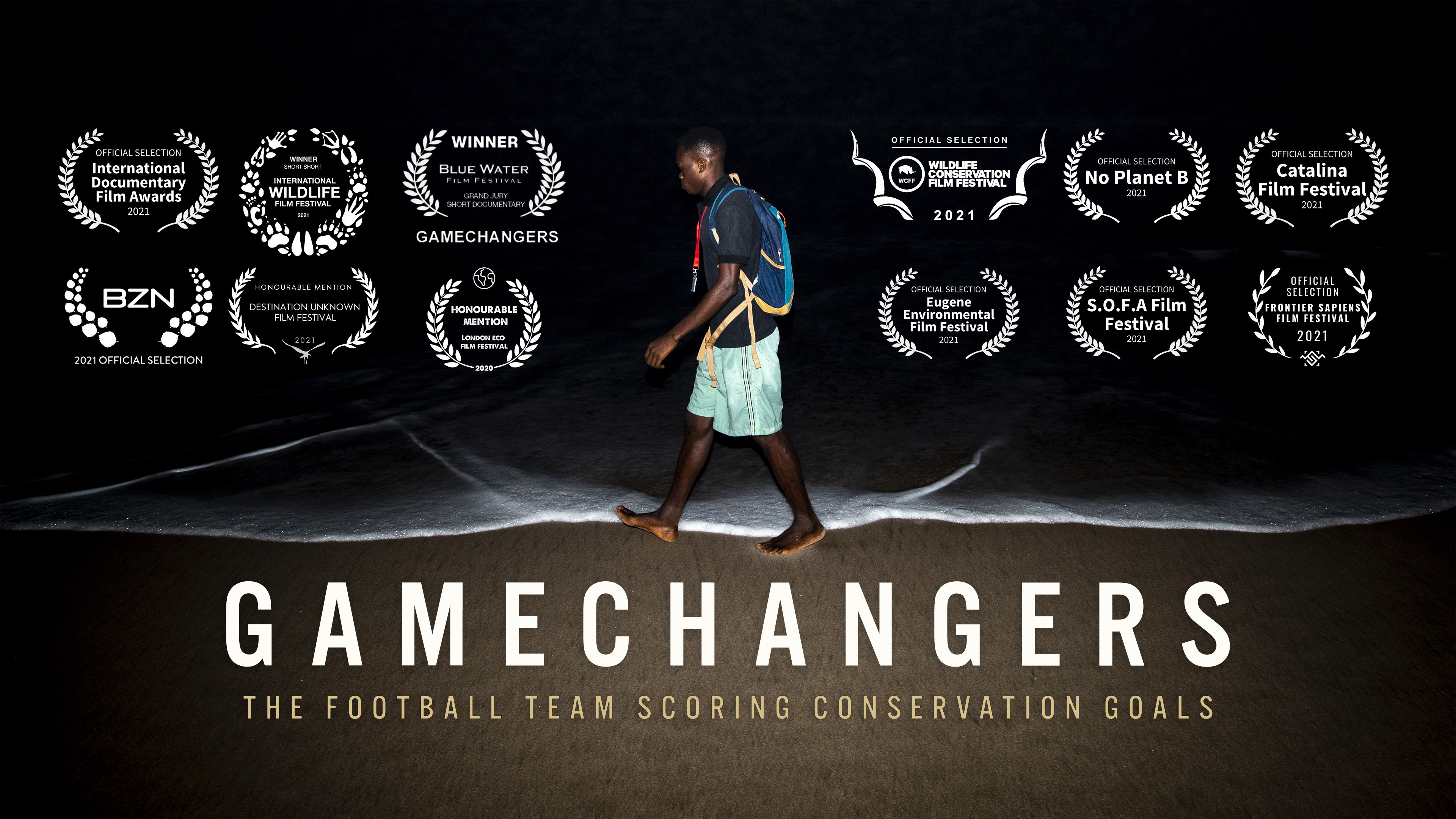
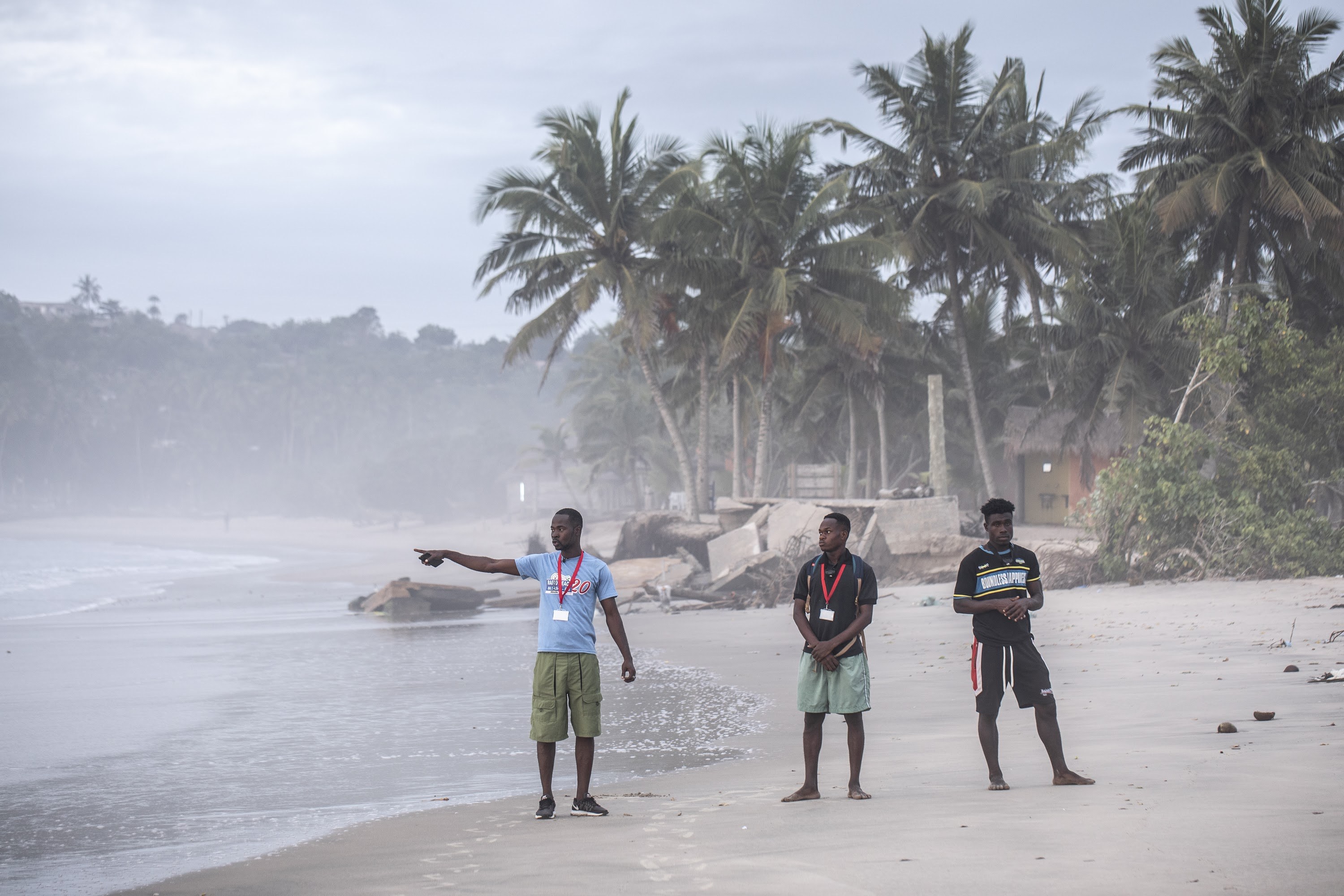
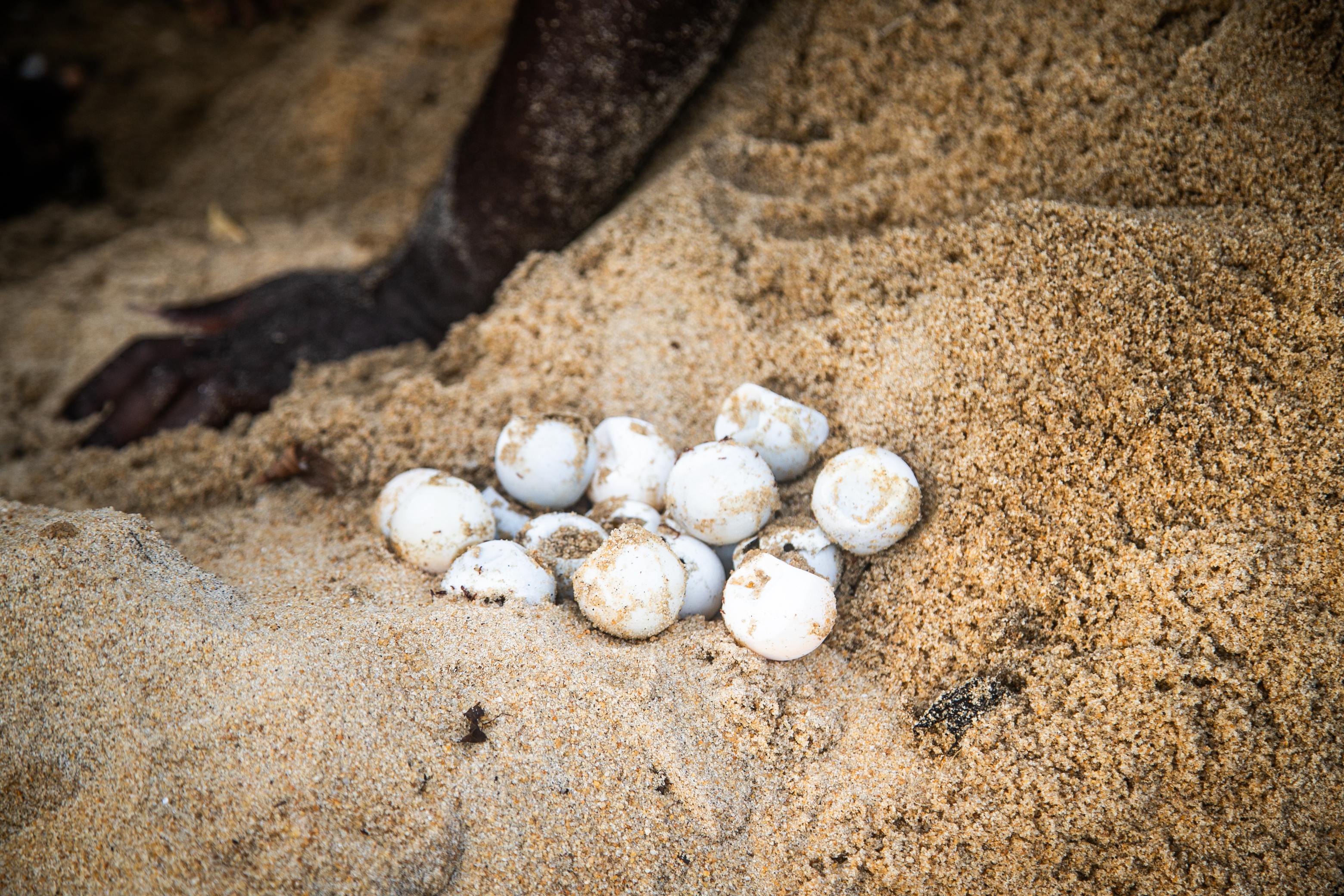
To promote long-term sea turtle conservation in Liberia, EJF engaged 10 former poachers and recruited them as beach patrollers. Isaac Weah, the lead patroller, shared a generational story about a fisherman saved by a sea turtle after his canoe capsized at sea. According to Isaac, this story, combined with the information he received from EJFs, changed how he sees turtles. For him, protecting sea turtles is now about safeguarding his community’s future and the health of the ocean itself for future generations.
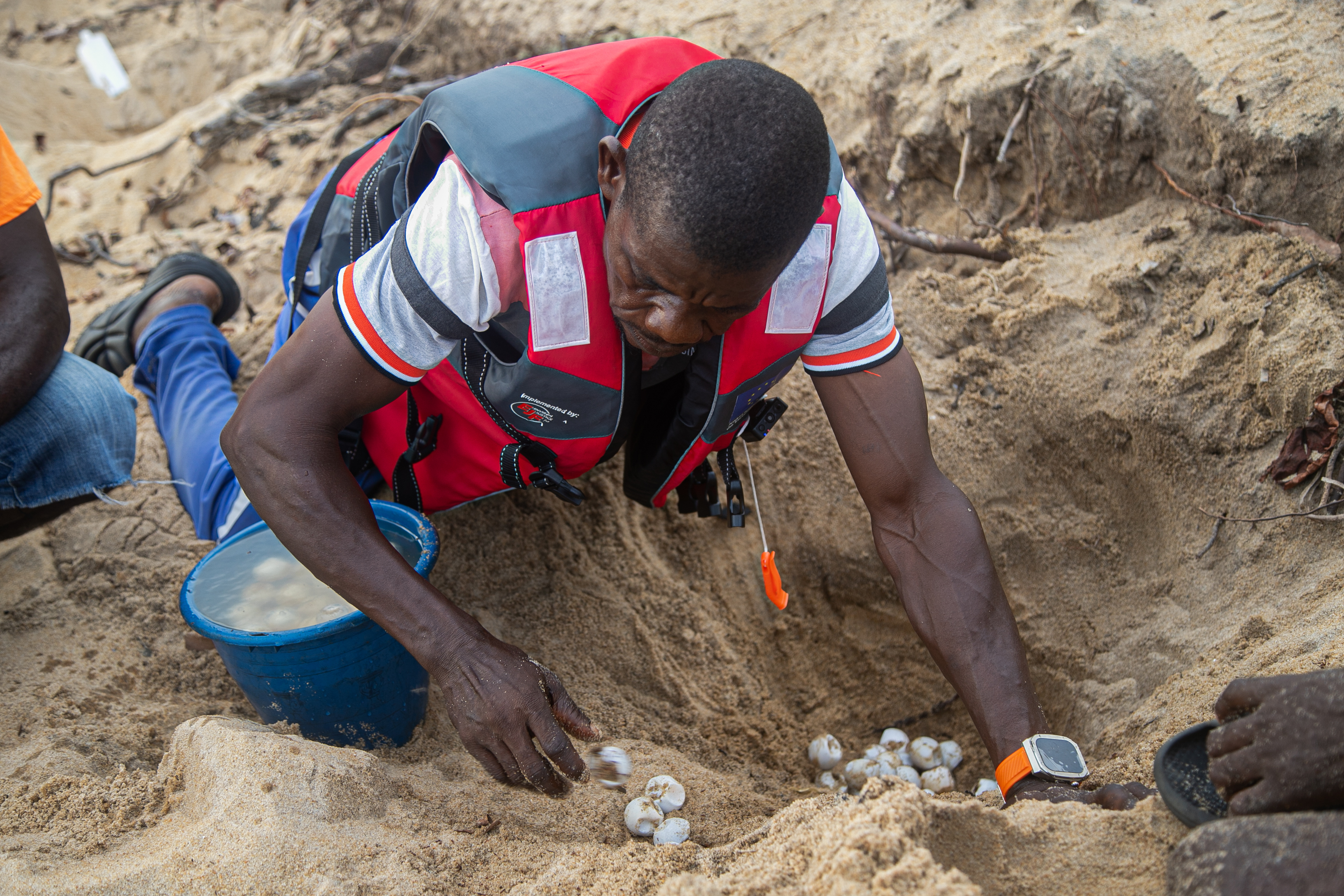
The patrollers were trained, equipped, and began regular nighttime patrols along nesting beaches. Community members and fishers were surprised to see former sea turtle hunters becoming their strongest protectors. These patrollers are safeguarding nesting sites, rescuing trapped turtles, documenting sightings, and reporting cases of nest destruction and other poaching. This new line of work has provided an alternative source of income for them.
Remaining challenges and future hopes
Since the beginning of regular beach monitoring in Grand Kru County, there has been a significant decline in the number of turtles killed by poachers, largely attributed to the patrollers’ constant day-and-night surveillance of the beaches. While many see this as a moment to celebrate, some fishers and community members who continue to poach are frustrated, despite a law banning poaching to protect sea turtles. According to the patrollers, this has made nighttime patrols very terrifying for them.
“We sometimes encounter bad people during night patrols and occasionally see things that many of us believe are ghosts,” said Patrick Gba, a patroller. “One night during patrol, we saw two people in the distance. But as we approached, they suddenly disappeared. That moment frightened us, and stayed with us for the rest of the night,” he added.
Poachers can be very violent and confrontational when caught. During a night patrol on the beach, patroller Jeremiah Sonpon and his team encountered a man who had hidden a nestling sea turtle in his bag. When questioned why he was on the beach at that hour and what he was carrying, he refused to open the bag and became violent. He was fined after being found guilty by the sea chief and the community police. In other cases, some fishers sometimes accidentally catch sea turtles as bycatch then deliberately refuse to release them.
“Some fishermen returned from the sea with a live leatherback turtle tangled in their nets. We insisted that the animal be released, but the fishermen refused, demanding that we should first pay for their fishing nets, which they claimed the turtle had damaged. The argument escalated and nearly turned into a fight, forcing us to call the community police to intervene,” said Jeremiah Sonpon.
Despite these challenges, the patrollers have achieved incredible successes. They have protected 828 turtle nests, helped 1,713 turtles return safely to the sea, documented 638 turtle nests destroyed and 151 turtles killed, from 2018 to June 2026. With EJF's ongoing support, sea turtles will keep returning to the beaches of Grand Kru and beyond.
SIGN UP FOR OUR EMAILS AND STAY UP TO DATE WITH EJF