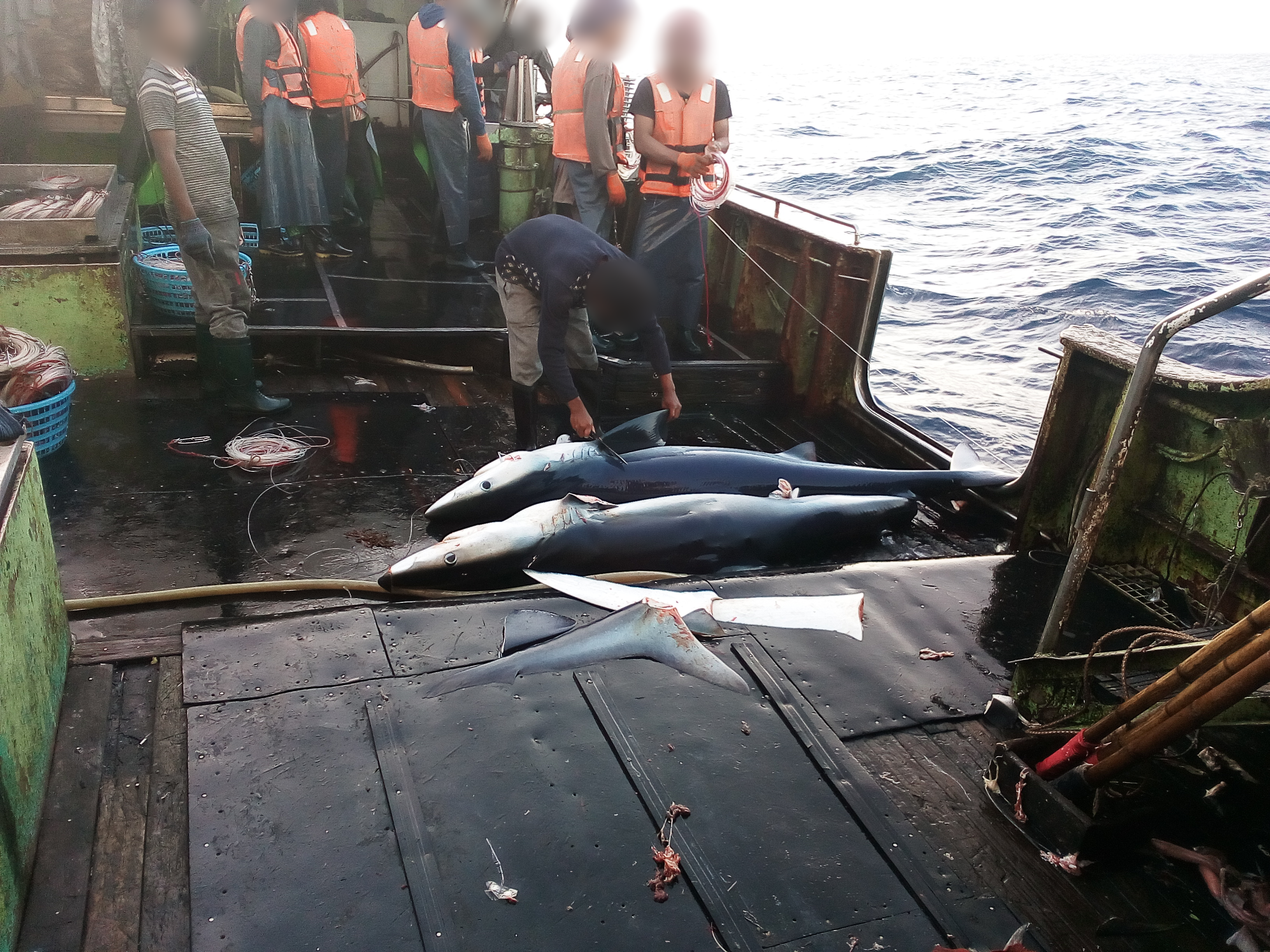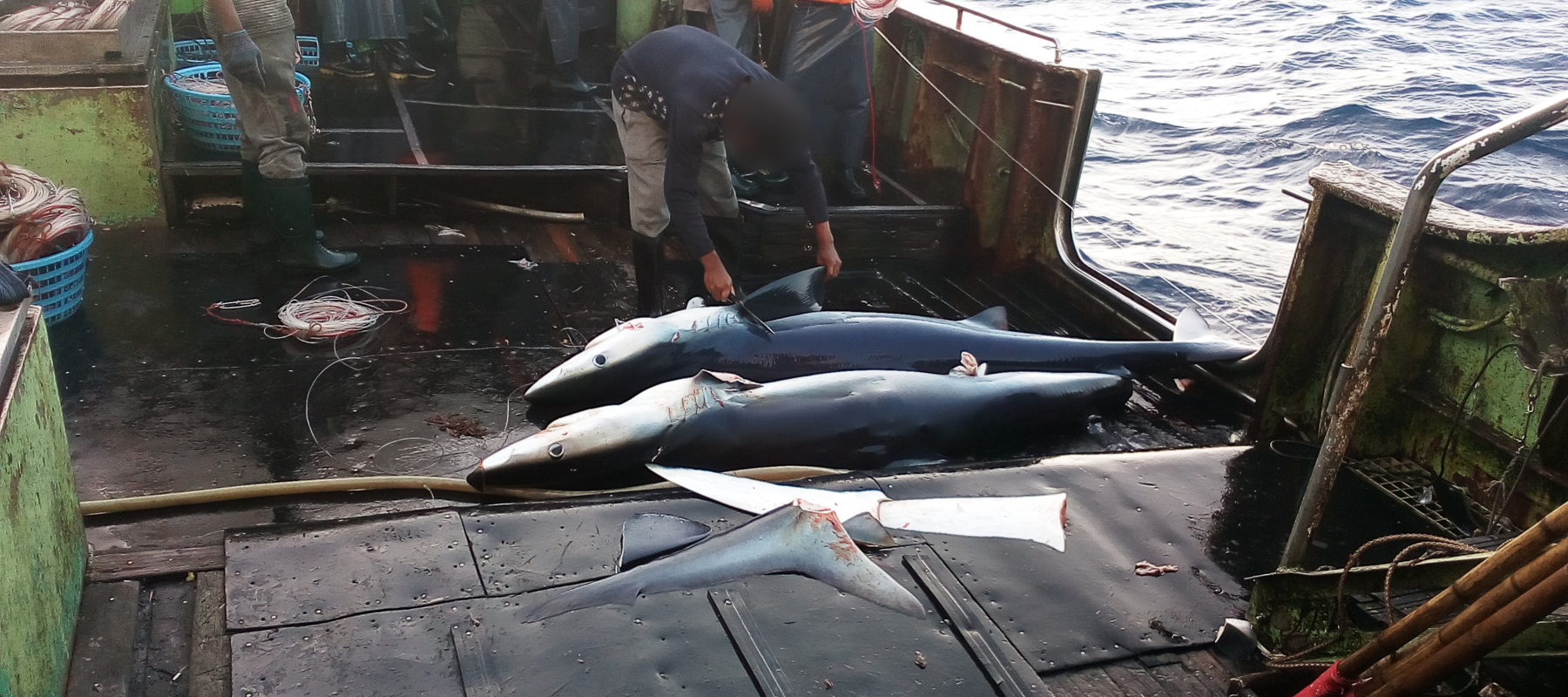
A cruel practice is going unseen and unpunished in the Atlantic Ocean. Threatened and vulnerable sharks are being captured, their fins sliced off, and their bodies thrown back to the sea to die. Instead of facing repercussions, the perpetrators profit.
In our new report and film, Cut & Run: Exposing Senegal as a gateway for the illegal shark fin trade, we have uncovered widespread evidence of illegal shark finning linked to distant-water tuna vessels that use the port of Dakar in Senegal. Serious failures in fisheries oversight have allowed illegally sourced seafood caught by these vessels to enter international markets.
The investigation
After interviewing 124 fishers who worked on board Chinese- and Taiwanese-owned tuna longliners between 2020 and 2026, we found that the majority reported witnessing shark finning: the cruel, wasteful and illegal practice of slicing a shark's fins off and discarding the rest of its body at sea. Sharks are sometimes still alive when they are thrown back into the water, left to sink and slowly suffocate because they can no longer swim.
Our investigation traces these devastating accounts of shark finning back to dozens of vessels operating out of Dakar, one of Africa's busiest fishing ports and a major hub for distant-water fleets operating in the Atlantic.
Of those interviewed, 47 fishers who had worked across 24 vessels said shark fins were landed in Dakar, either directly or after being transferred at sea. Deliberate action was taken to conceal what was happening on board, including:
Fins hidden away and evidence dumped before inspections.
Catches unloaded under the cover of darkness.
Mobile phones were confiscated from crew members to delete their photographs and videos.
Cut & Run
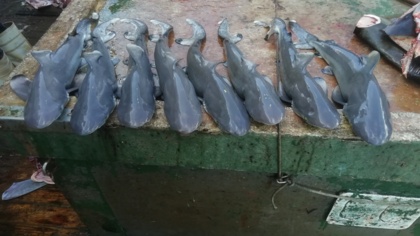
This report reveals extensive shark finning on board Chinese and Taiwanese-owned tuna vessels that call at Dakar, Senegal's main fishing port.
Click here to read the reportOversight is failing at the port
The findings raise serious questions about the strength of port controls in Senegal. The country is a party to the Port State Measures Agreement, an international framework designed to stop illegally caught seafood from ever reaching global markets. Yet fishers consistently told us that the catches they landed faced little or no meaningful inspection.
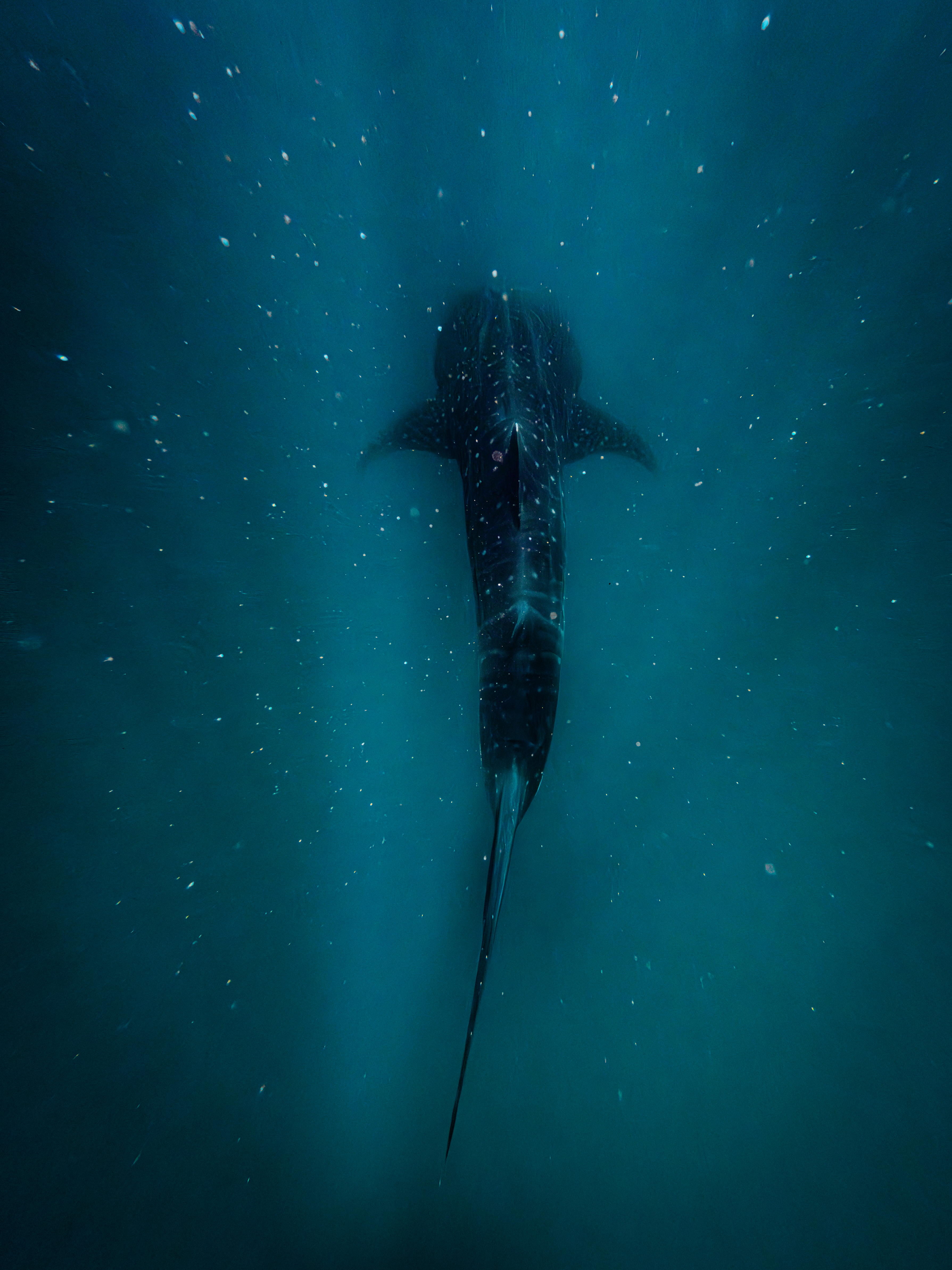
When fishing vessels can land products without effective scrutiny, illegal shark finning becomes easier to hide and harder to stop. Sharks play an essential role in maintaining healthy oceans. Protecting them is fundamental to sustainable fisheries, food security and the future of coastal communities.
Steve Trent, EJF CEO and Founder
Sharks under threat
Sharks are among the ocean's most threatened animals. An estimated 80 to 100 million are killed by fishing every year. Their disappearance puts the health of entire marine ecosystems at risk, and with it, the sustainability of the fisheries that millions of people depend on for food and their livelihoods.
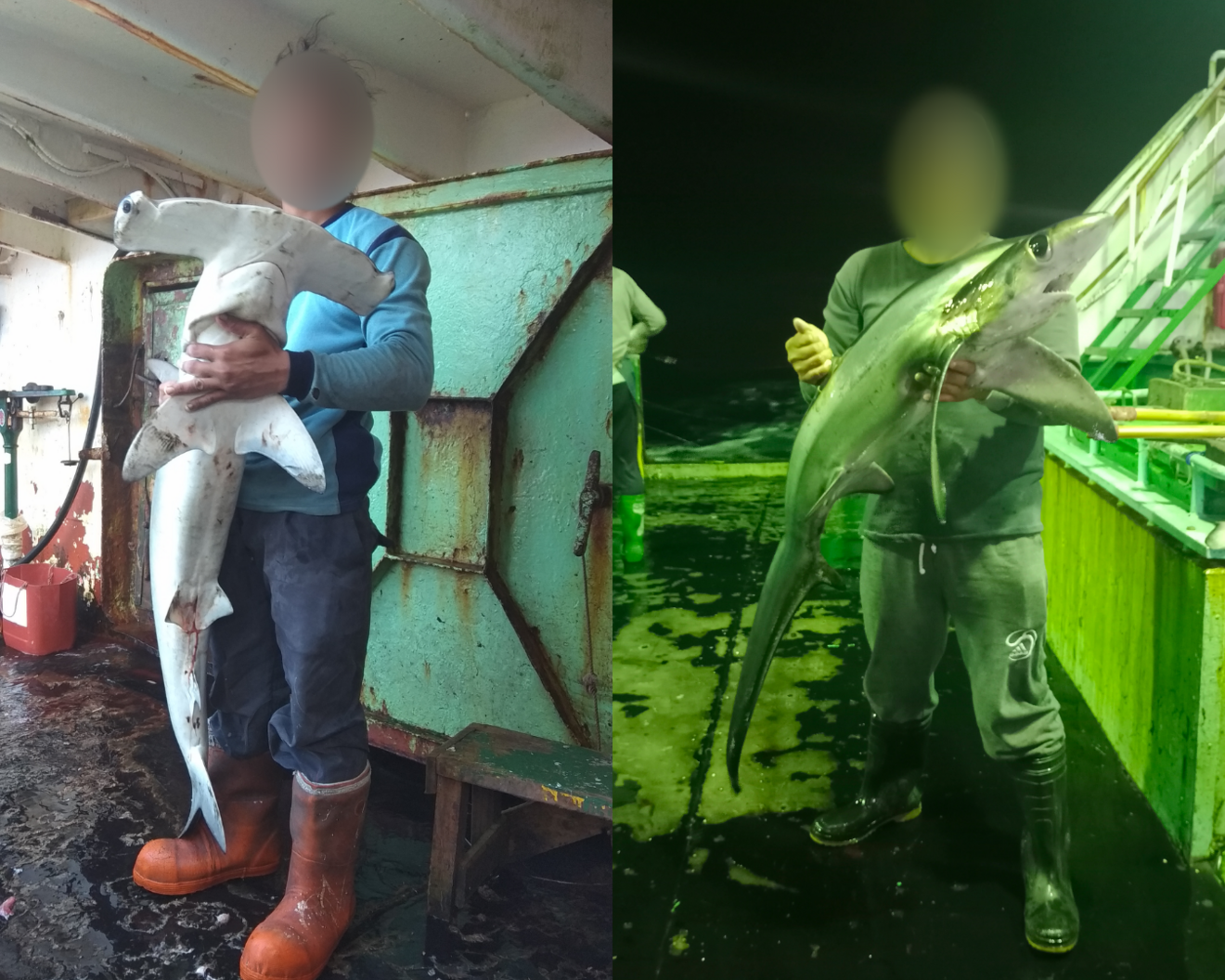
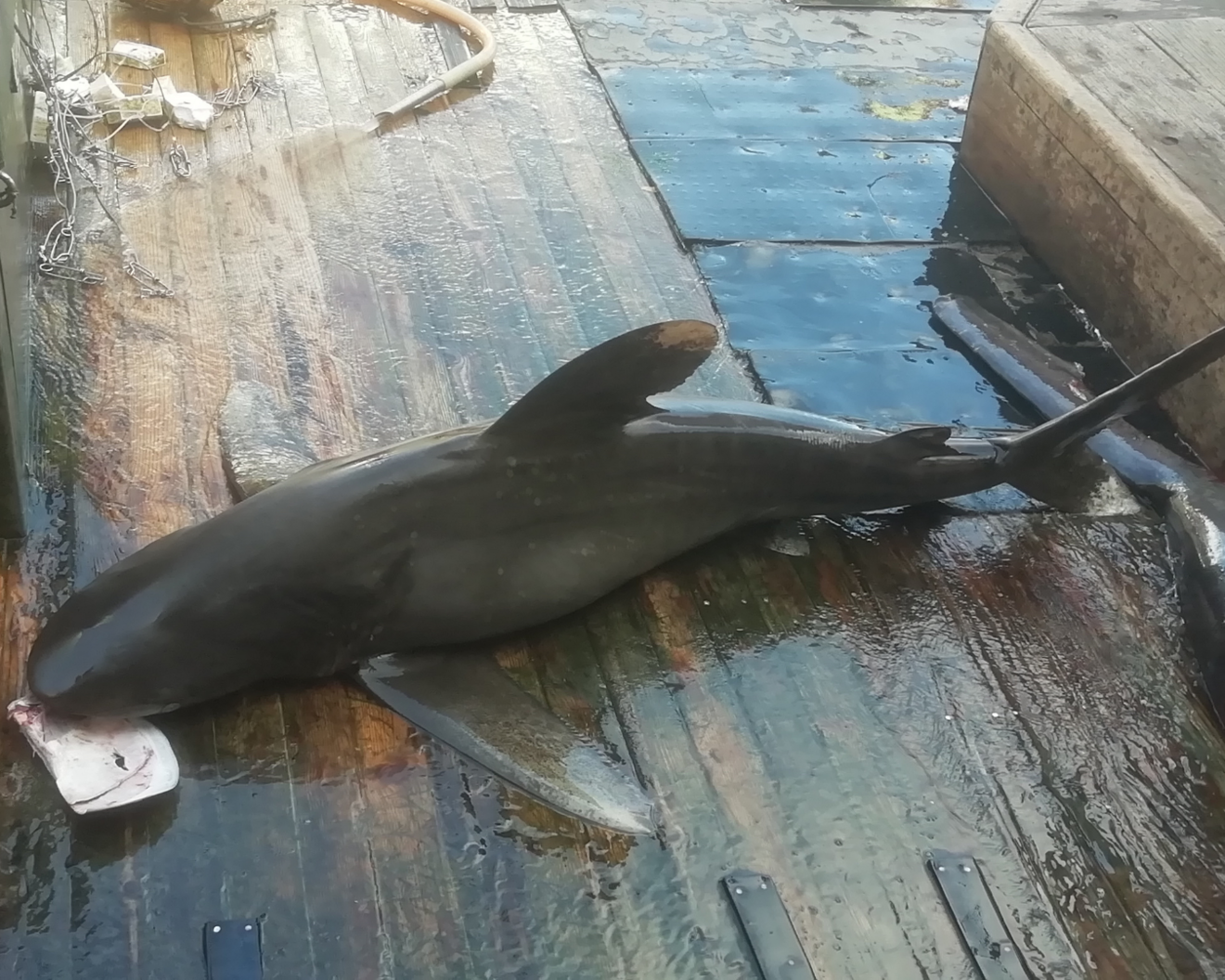
According to the International Union for Conservation of Nature (IUCN) Red List, 70% of pelagic sharks are threatened with extinction. We uncovered that several threatened shark species were finned on board the vessels under investigation, including:
Hammerhead sharks are listed on the IUCN's Red List as vulnerable or critically endangered.
Bigeye threshers are listed as vulnerable.
Oceanic whitetips are critically endangered.
The International Commission for the Conservation of Atlantic Tunas (ICCAT) explicitly prohibits its ‘active’ vessels from retaining all but one of these shark species, yet the photos and videos we collected from crew indicate that they are being captured.
A problem that reaches far beyond Senegal
The investigation also lays bare how far the seafood landed through Dakar travels. More than 1,800 tonnes of tuna and tuna-like products were exported directly from Senegal to Japan in 2024 alone. Processing companies in Thailand and Singapore have also imported tuna landed in Dakar before exporting the products to markets including the European Union, South Korea and the United States.
This raises serious concerns over the seafood being stocked on supermarket shelves and served in restaurants around the world. Consumers should take note: the seafood they are buying could be linked to vessels implicated in shark finning.
What needs to change
EJF is urging Senegal to strengthen inspections of high-risk vessels and adopt a mandatory "fins naturally attached" policy for all sharks landed in its ports, without the exceptions that create loopholes. We're also pushing ICCAT and the flag states of China and Taiwan to adopt the same rule and implement the transparency reforms set out in the Global Charter for Fisheries Transparency.
Read the report in English and French, and watch the film here.
The solutions already exist. Stronger port inspections and full implementation of the Global Charter for Fisheries Transparency would make it far harder for illegal fishing to remain hidden, and would help ensure that seafood reaching global markets is legal, sustainable and ethical.
Steve Trent, EJF CEO and Founder
SIGN UP FOR OUR EMAILS AND STAY UP TO DATE WITH EJF
Related items
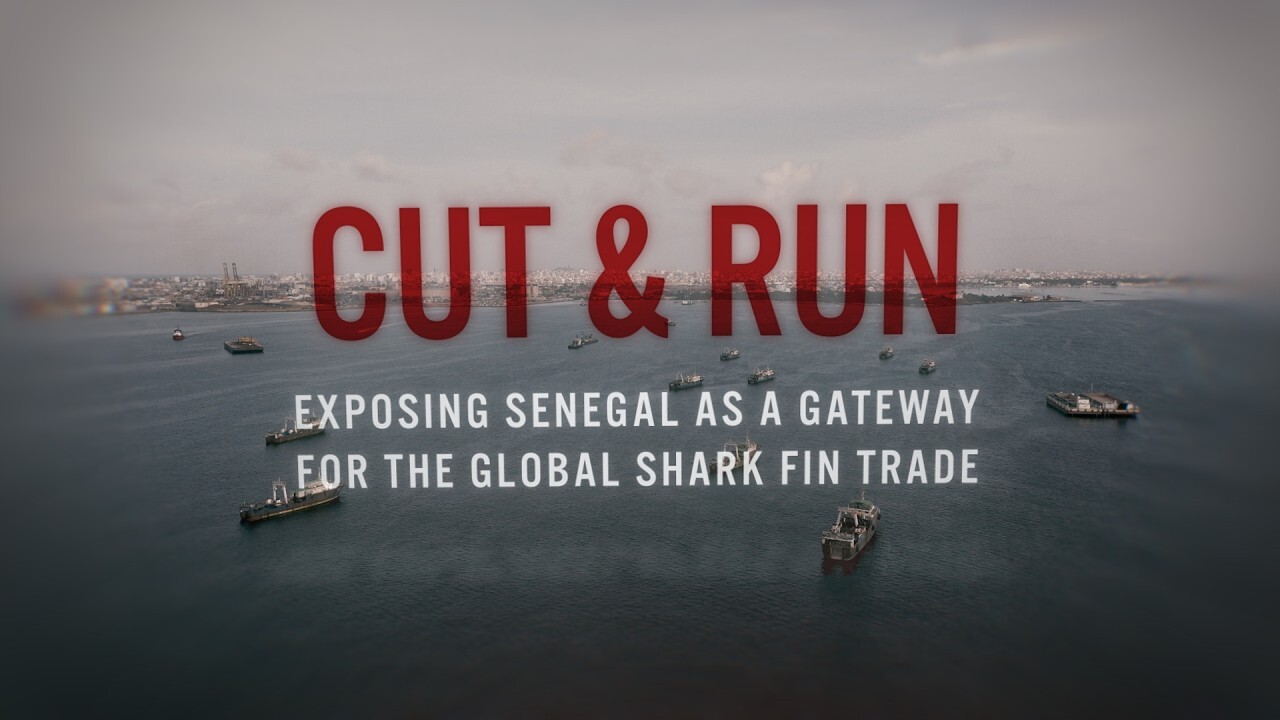
Cut & Run: Exposing Senegal as a gateway for the global shark fin trade
Tuna boats dock in Dakar by day. By night, illegal shark fins are smuggled ashore - and the world's seafood supply is funding it.
Senegal's port of Dakar is one of West Africa's busiest fishing hubs - and, a new EJF investigation reveals, a key gateway for the illegal global shark fin trade. Distant-water tuna longliners, many flagged to China and Taiwan, land their legal catch in daylight. But under cover of night, illegal shark fins are trafficked ashore, hidden among other cargo and, according to crew testimony, moved past inspectors with bribes.
'Cut & Run' draws on testimony from 87 Indonesian and Filipino crew members who spoke to EJF anonymously about the scale of the operation: sharks caught and finned on captain's orders, their bodies dumped at sea, their fins bound for lucrative markets in Asia. Dakar is a designated port under the Port State Measures Agreement, obligating Senegal to screen vessels and block illegal catch - obligations this investigation shows are being routinely evaded.