Fishing and maerl protection: NGOs challenge EU Commissioner Costas Kadis and Minister Catherine Chabaud in Cherbourg today
Brussels / Chausey – 9 June 2026
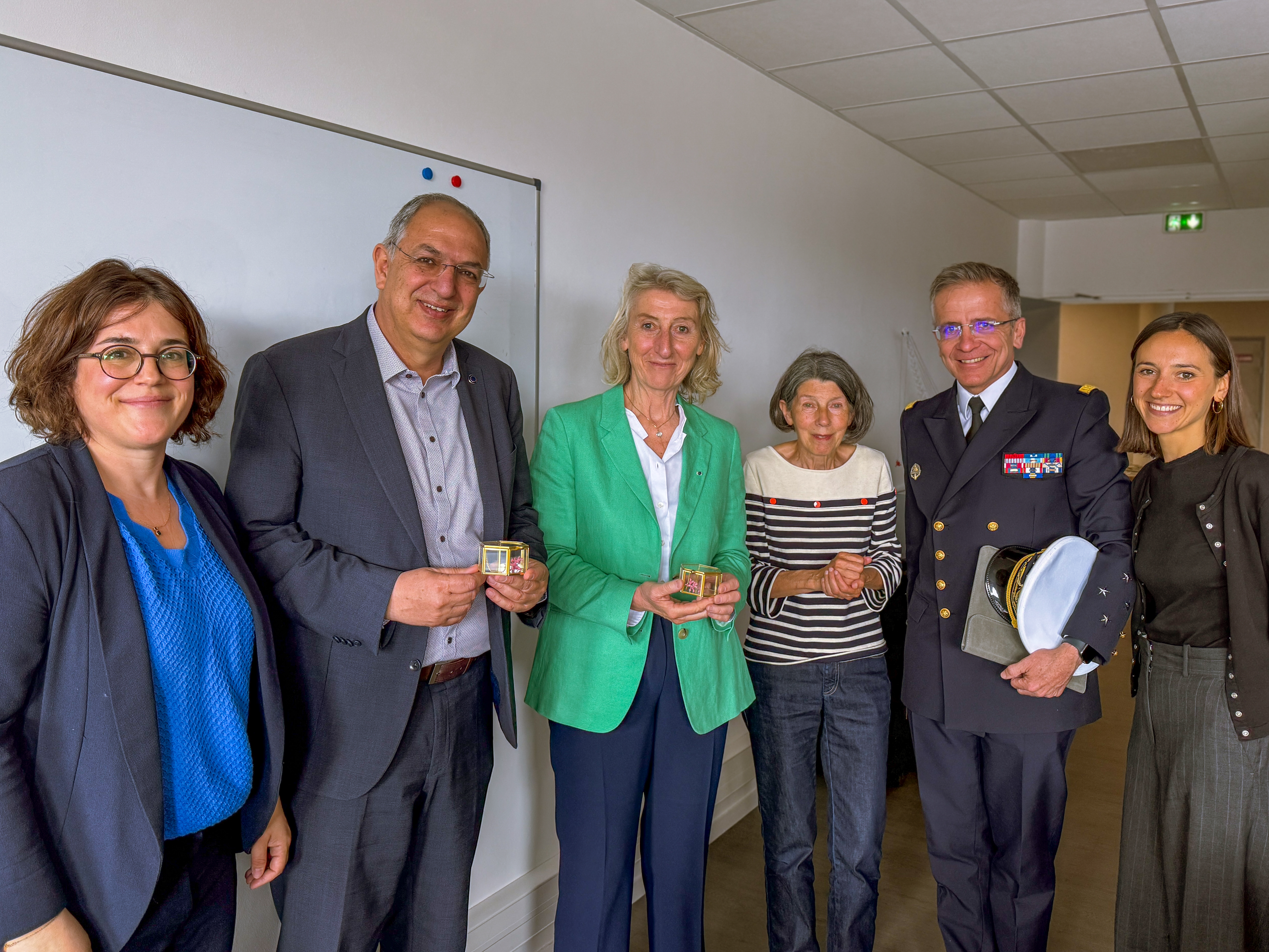
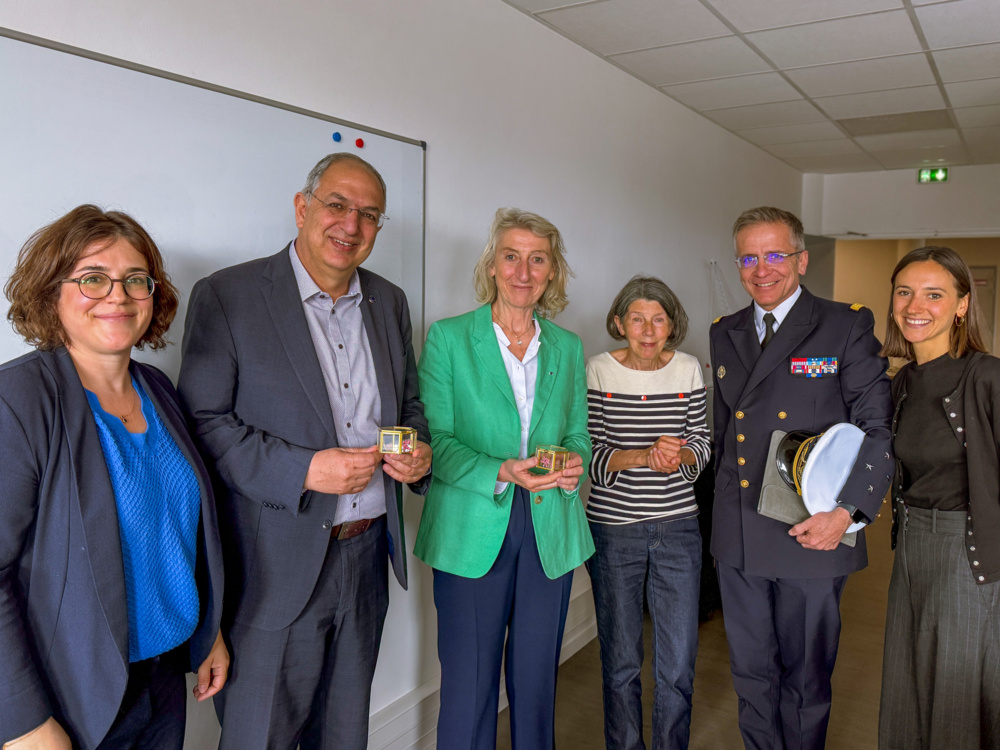
On 9 June, representatives of Manche Nature and the Environmental Justice Foundation (EJF) met with EU Commissioner for Fisheries and Oceans Costas Kadis and Minister for the Sea and Fisheries Catherine Chabaud to press for urgent action to strengthen protection of the fragile marine habitats of Chausey, in the Bay of Mont-Saint-Michel.
The meeting was also attended by Marc Chappuis, Prefect of Manche, Benoît de Guibert, Maritime Prefect for the English Channel and the North Sea, and Stéphanie Yon-Courtin, Member of the European Parliament (MEP) and Vice-Chair of the Committee on Fisheries (PECH).
At the meeting, the organisations presented a sample of maerl, a coralline alga known as the 'pink treasure', as a symbol of both the ecological richness and the vulnerability of this marine habitat found beneath the waters of the archipelago.
Maerl beds and seagrass meadows form underwater forests and critical nurseries for marine life. They support over 1,000 species, providing feeding, spawning and shelter grounds for numerous commercially important species including scallops, lobsters, sole and clams.
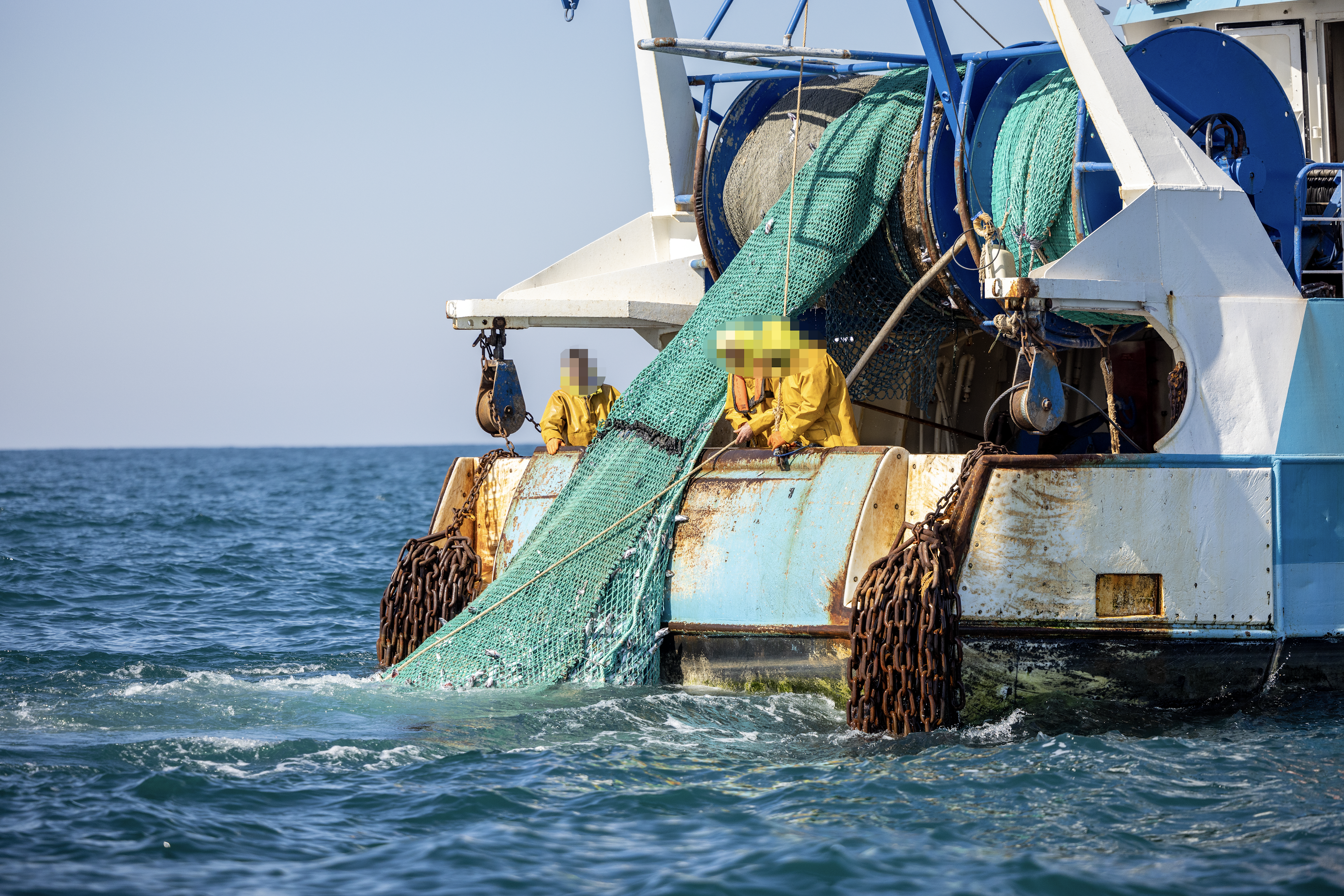
Maerl is an extremely rare and fragile marine habitat that grows by less than one millimetre per year. While it takes centuries to develop, it can be destroyed in a matter of minutes by bottom-towed fishing gear. What is lost today cannot be restored within a generation.
"Protecting maerl is not just about protecting marine biodiversity," said Laura Touvet, President of Manche Nature. “Preserving marine nurseries today means safeguarding the resources, livelihoods and food security of tomorrow.”
The meeting takes place against a backdrop of growing public mobilisation. A Fishing Risk Assessment (ARP) is currently under way to evaluate the impacts of fishing activities on protected habitats and to determine future management measures for the Natura 2000 site.
The organisations welcomed this ambitious process, initiated by France across all its marine Natura 2000 sites, highlighting it as a critical opportunity to translate biodiversity protection commitments into concrete action on the ground.
Discussions focused on how to strengthen the effectiveness of marine protected areas while supporting the communities that depend on the sea. Participants underlined the importance of continuing dialogue with fishing professionals and ensuring that conservation measures genuinely address the protection of sensitive marine habitats, a stated priority for the European Commission.
Despite Chausey's status as a marine protected area, and European-level protections under Natura 2000, the OSPAR Convention and EU biodiversity commitments, maerl habitats continue to be degraded by bottom-towed fishing activities.
The organisations stressed that lower-impact fishing methods already exist, and that it is essential to support fishing professionals in transitioning towards practices compatible with the preservation of sensitive habitats and the long-term sustainability of fish populations.
“Socio-economic considerations must naturally be taken into account, but they should above all guide the support needed for necessary transition, not be used to weaken protection measures where significant risks to protected habitats have been identified,” said Marie Colombier, Campaign Lead at EJF. “Protecting maerl beds is not about choosing fishing against conservation. It is about protecting the habitats that underpin the productivity of fisheries.”
The organisations are calling on French and European authorities to guarantee effective protection of sensitive marine habitats within Natura 2000 sites and to ensure that decisions taken under the ARP process are commensurate with what is at stake.
ENDS
NOTES TO EDITORS
About EJF
Our work to secure environmental justice aims to protect our global climate, ocean, forests, wetlands, wildlife and defend the fundamental human right to a secure natural environment, recognising that all other rights are contingent on this. EJF works internationally to inform policy and drive systemic, durable reforms to protect our environment and defend human rights. We investigate and expose abuses and support environmental defenders, Indigenous peoples, communities, and independent journalists on the frontlines of environmental injustice. Our campaigns aim to secure peaceful, equitable and sustainable futures. Our investigators, researchers, filmmakers, and campaigners work with grassroots partners and environmental defenders across the globe.
For more information or to organise an interview with one of our team, please contact media@ejfoundation.org.
About Manche Nature
Manche-Nature, founded in 1988, is supported by 400 members and 15 local associations that work alongside it to campaign for environmental conservation. As a nature conservation organisation, its team of volunteers conducts an annual survey of changes in the flora and fauna of our department. It publishes a quarterly magazine, ‘L’Argiope’, and thematic reports. As a community-based organisation, it participates in public debates on environmental issues: ‘consultations’, public inquiries, etc. As an accredited organisation, it sits on numerous committees. As a community education organisation, it organises, at the request of public prosecutors, awareness-raising courses on environmental protection. It regularly organises conference debates and nature outings. As a responsible and representative organisation, it does not hesitate to take legal action when the facts are established and the State, local authorities, businesses or individuals have failed to heed its warnings. As an independent organisation, it receives no subsidies. It is funded by membership fees and donations received on a regular basis.
For further information, please contact manche-nature@orange.fr.
SIGN UP FOR OUR EMAILS AND STAY UP TO DATE WITH EJF