Ocean Protection: French Court Rules That Natura 2000 Measures Must Be Effective
A French administrative court has given the French authorities nine months to strengthen protection measures for the Natura 2000 site of Bancs des Flandres, finding that the current measures are insufficient to ensure the site's conservation. The ruling, which partially upholds claims brought by the Environmental Justice Foundation and Défense des Milieux Aquatiques, reignites the debate over the effectiveness of Fisheries Risk Assessments (FRAs) in French Natura 2000 sites.
Monday, 15 June 2026 – In a ruling issued on Friday 12 June 2026, the Administrative Court of Rouen (FR) partially upheld the claims brought by the Environmental Justice Foundation (EJF) and Défense des Milieux Aquatiques (DMA) regarding the protection of the Bancs des Flandres Natura 2000 site.
The Court found that the measures currently in force to regulate the use of towed fishing nets within the three-nautical-mile coastal zone are insufficient to restore protected marine habitats to a favourable conservation status. It therefore ordered the French authorities to strengthen the applicable regulations within nine months.
This first-instance ruling is particularly significant as it comes amid the ongoing implementation of Fisheries Risk Assessments across Natura 2000 sites in France. Despite the existence of such assessments and the management measures adopted as a result, the Court found that the current arrangements for the Banc des Flandres site remain insufficient to ensure the effective conservation of the Natura 2000 habitats concerned.
“Today, the Court confirms that the current measures are not sufficient to effectively protect some of the most sensitive marine habitats along our coastline,” said Philippe Garcia, President of Défense des Milieux Aquatiques. “This is a strong signal that should encourage authorities to act more quickly and more decisively to preserve our shared natural heritage.”
The Court notably highlighted the absence of certain impact-reduction measures despite documented pressures, the lack of specific measures for some sensitive habitats, and the failure to demonstrate any improvement in their conservation status. It concluded that additional measures must be adopted to reduce the impacts of bottom trawling on protected habitats.
The organisations behind the case emphasise that stronger protection for marine habitats must go hand in hand with measures that ensure a just transition for affected fishers. In its ruling, the Court also noted that economic support for professionals impacted by regulatory changes remains possible, even though it considered that it could not compel the administration to provide such support.
The ruling comes as Fisheries Risk Assessments are currently underway at numerous Natura 2000 sites across France. It is particularly timely given that the assessment for the Chausey Natura 2000 site is ongoing and has prompted mobilisation by environmental and marine conservation organisations, which are calling on decision-makers and the public to ensure effective protection for the habitats and species concerned.
“I had the opportunity to raise this issue on 9 June in Cherbourg with the European Commissioner for Fisheries and Oceans and the French Minister for the Sea and Fisheries,” said Marie Colombier, Senior Ocean Policy Advisor at the Environmental Justice Foundation. “The Court’s decision confirms that Fisheries Risk Assessments cannot become a box-ticking exercise. Authorities must be able to show that the measures adopted actually protect Natura 2000 habitats and achieve the conservation objectives required under EU law. This protection must also be delivered through a just transition approach, ensuring appropriate support for affected fishers.”
For the organisations, this ruling serves as a reminder of a simple principle: conservation measures should be judged by their ecological results, not by the existence of procedures alone.
The organisations will analyse the implications of the ruling in the coming weeks, in the light of other ongoing legal proceedings and policy processes concerning the protection of marine Natura 2000 sites in France, and across Europe.
ENDS
NOTES TO EDITORS
• The legal challenge leading to this ruling was brought by the Environmental Justice Foundation and Défense des Milieux Aquatiques in February 2025, seeking stronger protection for Natura 2000 marine habitats at the Flemish Banks and Chausey Islands sites from the impacts of bottom-towed fishing gear.
• The organisations argued that the measures implemented by the French State were insufficient to prevent the deterioration of protected habitats and to ensure their maintenance or restoration to favourable conservation status, as required under European law.
• On 12 June 2026, the Administrative Court of Rouen partially upheld their claims regarding the Flemish Banks Natura 2000 site. The Court found the measures governing fishing with towed nets within the three-nautical-mile coastal zone to be insufficient and ordered the Prefect to adopt additional measures within nine months.
• The court ordered the French State to pay €1,500 to the organisations towards legal cost.
• The Court did not order a general ban on bottom trawling requested by the organisations and did not uphold all of their arguments concerning the remainder of the Natura 2000 site.
• The organisations had also requested that conservation measures be accompanied by support for fishers potentially affected by regulatory changes. While the Court found it could not impose such a requirement on the administration, it recalled that economic support for affected professionals remains possible.
• This ruling comes amid the rollout of Fisheries Risk Assessments across French Natura 2000 sites. Despite the existence of an FRA and management measures adopted as a result at the Flemish Banks site, the Court found that the current measures remain insufficient to achieve the conservation objectives established for certain protected habitats.
• A Fisheries Risk Assessment is currently underway at the Chausey Natura 2000 site. Environmental Justice Foundation and Défense des Milieux Aquatiques are closely monitoring this process as part of their Chausey Pink Treasure campaign.
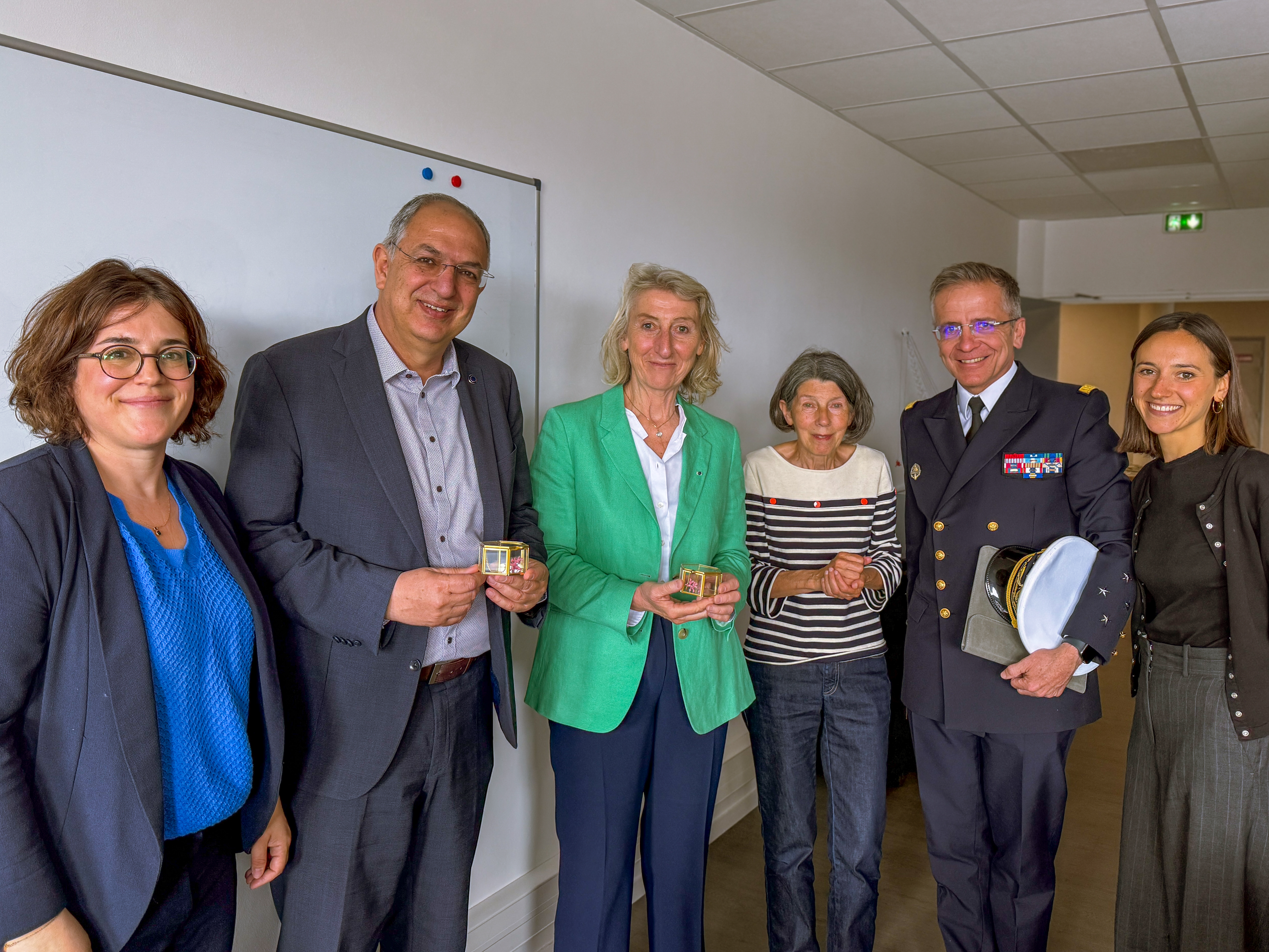
• On 9 June, representatives of Manche Nature and Environmental Justice Foundation (EJF) met with European Commissioner for Fisheries and Oceans Costas Kadis and French Minister for the Sea and Fisheries Catherine Chabaud to raise concerns about the urgent need to strengthen protection for vulnerable marine habitats. The meeting was attended by Marc Chappuis, Prefect of Manche, Benoît de Guibert, Maritime Prefect for the English Channel and North Sea, and Stéphanie Yon-Courtin, Member of the European Parliament and Vice-Chair of the Parliament’s Fisheries Committee. On this occasion, the organisations presented a sample of maerl, a coralline algae known as the “pink treasure”, symbolising both the ecological richness and the vulnerability of this marine habitat found beneath the waters of the Chausey archipelago.
• EJF will publish a report on 25 June 2026 examining the implementation of Fisheries Risk Assessments across French Natura 2000 sites.
About EJF
Our work to secure environmental justice aims to protect our global climate, ocean, forests, wetlands, wildlife and defend the fundamental human right to a secure natural environment, recognising that all other rights are contingent on this. EJF works internationally to inform policy and drive systemic, durable reforms to protect our environment and defend human rights. We investigate and expose abuses and support environmental defenders, Indigenous peoples, communities, and independent journalists on the frontlines of environmental injustice. Our campaigns aim to secure peaceful, equitable and sustainable futures. Our investigators, researchers, filmmakers, and campaigners work with grassroots partners and environmental defenders across the globe.
About DMA
Our primary focus is to take legal action before French administrative courts to reduce pressures on aquatic environments. We fight in particular against the overexploitation of these ecosystems, for instance regarding migratory fish (salmon, shad, lamprey, eel), bottom trawling, the diversion of watercourses, or migratory birds. DMA has succeeded in shortening the bottom trawling season in the three-mile zone of Arcachon from 12 to 5 months, and later in excluding this fishing technique from marine protected areas along these shores. It is essential to build on this momentum to safeguard all marine protected areas, but also the entire three-mile zone. Our major project is to free this zone from all non-selective fishing gear, that is, from all nets. This is the ‘Golden Miles’ project, which has already been a reality for decades in the USA and other countries.
SIGN UP FOR OUR EMAILS AND STAY UP TO DATE WITH EJF