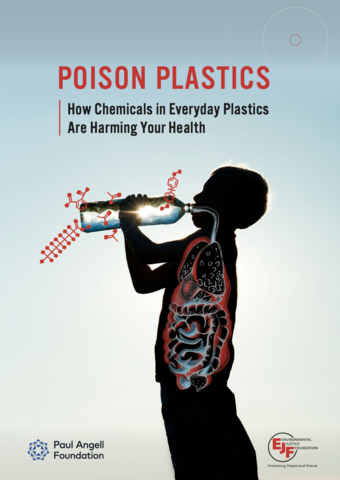
Poison Plastics: How chemicals in everyday plastics are harming your health
Plastics and the chemicals they contain have become deeply embedded in our lives within only a single generation. They are found in the vast majority of items we rely on every day – from food packaging and takeaway containers to clothing, furniture, hygiene products, infant feeding bottles and children’s toys. This report shares our novel analyses of the PlastChem data to shed light on the risks presented to human health by everyday items containing plastic-associated chemicals. The findings make the case for a world where the products we use every day are safe by design; today, they are not.
Plastics and the chemicals they contain have become deeply embedded in our lives within only a single generation. They are found in the vast majority of items we rely on every day – from food packaging and takeaway containers to clothing, furniture, hygiene products, infant feeding bottles and children’s toys.
This report shares our novel analyses of the PlastChem data to shed light on the risks presented to human health by everyday items containing plastic-associated chemicals. The findings make the case for a world where the products we use every day are safe by design; today, they are not.
Plastics and the chemicals they contain have become deeply embedded in our lives within only a single generation. They are found in the vast majority of items we rely on every day – from food packaging and takeaway containers to clothing, furniture, hygiene products, infant feeding bottles and children’s toys.
This report shares our novel analyses of the PlastChem data to shed light on the risks presented to human health by everyday items containing plastic-associated chemicals. The findings make the case for a world where the products we use every day are safe by design; today, they are not.
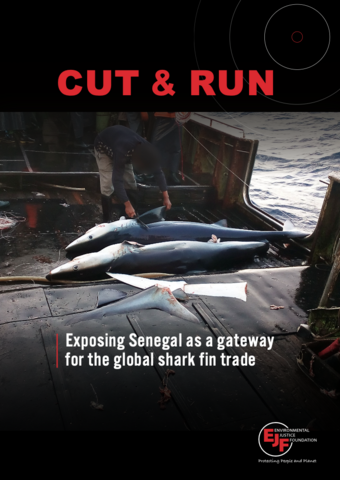
Cut & Run: Exposing Senegal as a gateway for the global shark fin trade
This report reveals extensive shark finning on board Chinese and Taiwanese-owned tuna vessels that call at Dakar, Senegal's main fishing port. Drawing on first-hand testimony from fishers who witnessed this cruel and often illegal practice, the report exposes how fins were routinely landed in Dakar, with enforcement at the port easily evaded or non-existent. It also reveals the high risk of tuna linked to shark finning entering global supply chains. Without urgent action from Senegal and international regulators to close these loopholes, the trade of shark fins will continue unchecked.
This report reveals extensive shark finning on board Chinese and Taiwanese-owned tuna vessels that call at Dakar, Senegal's main fishing port. Drawing on first-hand testimony from fishers who witnessed this cruel and often illegal practice, the report exposes how fins were routinely landed in Dakar, with enforcement at the port easily evaded or non-existent. It also reveals the high risk of tuna linked to shark finning entering global supply chains. Without urgent action from Senegal and international regulators to close these loopholes, the trade of shark fins will continue unchecked.
This report reveals extensive shark finning on board Chinese and Taiwanese-owned tuna vessels that call at Dakar, Senegal's main fishing port. Drawing on first-hand testimony from fishers who witnessed this cruel and often illegal practice, the report exposes how fins were routinely landed in Dakar, with enforcement at the port easily evaded or non-existent. It also reveals the high risk of tuna linked to shark finning entering global supply chains. Without urgent action from Senegal and international regulators to close these loopholes, the trade of shark fins will continue unchecked.
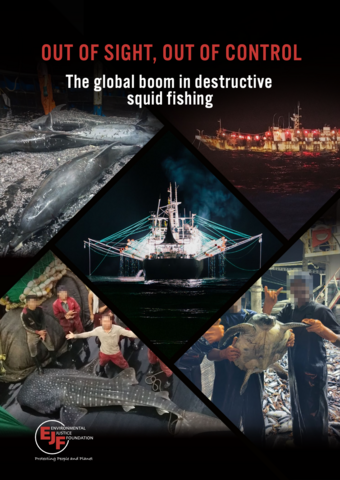
OUT OF SIGHT, OUT OF CONTROL: The global boom in destructive squid fishing
The Environmental Justice Foundation's new global report exposes what happens aboard distant-water squid vessels operating beyond any oversight, forced labour, physical violence, and deaths at sea across fisheries that supply 60% of the world's squid. The European Union is the world's largest squid importer. What happens out of sight has consequences here.
The Environmental Justice Foundation's new global report exposes what happens aboard distant-water squid vessels operating beyond any oversight, forced labour, physical violence, and deaths at sea across fisheries that supply 60% of the world's squid.
The European Union is the world's largest squid importer. What happens out of sight has consequences here.
The Environmental Justice Foundation's new global report exposes what happens aboard distant-water squid vessels operating beyond any oversight, forced labour, physical violence, and deaths at sea across fisheries that supply 60% of the world's squid.
The European Union is the world's largest squid importer. What happens out of sight has consequences here.
La Ley Europea del Océano: Garantizando el futuro marítimo de Europa: La seguridad, la competitividad y la resiliencia futuras de Europa se decidirán en el mar. La «Ley Europea de los Océanos » (European Ocean Act) constituye una oportunidad única para establecer el marco operativo común del que carece actualmente Europa: información y toma de decisiones transparentes, normas previsibles, planificación coordinada y responsabilidad cuantificable, en los distintos sectores marítimos y más allá de las fronteras. Esta nota orientativa expone dos imperativos estratégicos para esta Ley de los Océanos.
La seguridad, la competitividad y la resiliencia futuras de Europa se decidirán en el mar. La «Ley Europea de los Océanos » (European Ocean Act) constituye una oportunidad única para establecer el marco operativo común del que carece actualmente Europa: información y toma de decisiones transparentes, normas previsibles, planificación coordinada y responsabilidad cuantificable, en los distintos sectores marítimos y más allá de las fronteras. Esta nota orientativa expone dos imperativos estratégicos para esta Ley de los Océanos.
La Loi Europeénne sur les Océans: Assurer l’avenir maritime de l’Europe: La sécurité, la compétitivité et la résilience futures de l’Europe se joueront en mer. La « Loi européenne sur les océans » (European Ocean Act) constitue une occasion unique de mettre en place le cadre opérationnel commun qui fait actuellement défaut à l’Europe : une information et une prise de décision transparentes, des règles prévisibles, une planification coordonnée et une responsabilité mesurable, à travers les différents secteurs maritimes et au-delà des frontières. Cette note d’orientation expose deux impératifs stratégiques pour cette Loi sur les océans.
La sécurité, la compétitivité et la résilience futures de l’Europe se joueront en mer. La « Loi européenne sur les océans » (European Ocean Act) constitue une occasion unique de mettre en place le cadre opérationnel commun qui fait actuellement défaut à l’Europe : une information et une prise de décision transparentes, des règles prévisibles, une planification coordonnée et une responsabilité mesurable, à travers les différents secteurs maritimes et au-delà des frontières. Cette note d’orientation expose deux impératifs stratégiques pour cette Loi sur les océans.
「水產供應鏈追蹤追溯與透明度專案」專案成 果與產業建議報告書: 豐群水產、英國環境正義基金會與台灣動物社會研究會歷時兩年合作,完成對豐群水產漁獲追蹤追溯系統的差距分析,並提出具體改善建議,企業執行改善計畫,是推動供應鏈追蹤追溯機制更加完整及透明化的重要里程碑。台灣動物社會研究會以及環境正義基金會表示,唯有透過企業端追溯管理、政府透明治理及國際標準接軌三者同步推進,方能逐步實現「從漁撈到餐盤」(Hook to Plate) 海產供應鏈全面透明之目標。
The European Ocean Act: Securing Europe’s Ocean Future: Europe’s future security, competitiveness and resilience will be decided at sea. The European Ocean Act is a unique opportunity to establish the common operating framework Europe currently lacks: transparent information and decision-making, predictable rules, coordinated planning and measurable accountability across maritime sectors and borders. This policy briefing lays out two strategic imperatives for the Ocean Act.
Europe’s future security, competitiveness and resilience will be decided at sea. The European Ocean Act is a unique opportunity to establish the common operating framework Europe currently lacks: transparent information and decision-making, predictable rules, coordinated planning and measurable accountability across maritime sectors and borders. This policy briefing lays out two strategic imperatives for the Ocean Act.
You can also read the French version here and the Spanish version here.
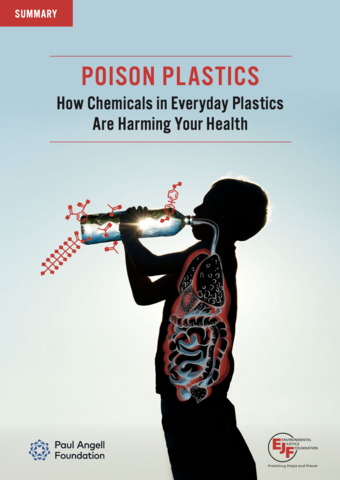
Poison Plastics: How chemicals in everyday plastics are harming your health - Report Summary: Plastics and the chemicals they contain have become deeply embedded in our lives within only a single generation. They are found in the vast majority of items we rely on every day – from food packaging and takeaway containers to clothing, furniture, hygiene products, infant feeding bottles and children’s toys. This summary of our full report shares our novel analyses of the PlastChem data to shed light on the risks presented to human health by everyday items containing plastic-associated chemicals. The findings make the case for a world where the products we use every day are safe by design; today, they are not.
Plastics and the chemicals they contain have become deeply embedded in our lives within only a single generation. They are found in the vast majority of items we rely on every day – from food packaging and takeaway containers to clothing, furniture, hygiene products, infant feeding bottles and children’s toys.
This summary of our full report shares our novel analyses of the PlastChem data to shed light on the risks presented to human health by everyday items containing plastic-associated chemicals. The findings make the case for a world where the products we use every day are safe by design; today, they are not.
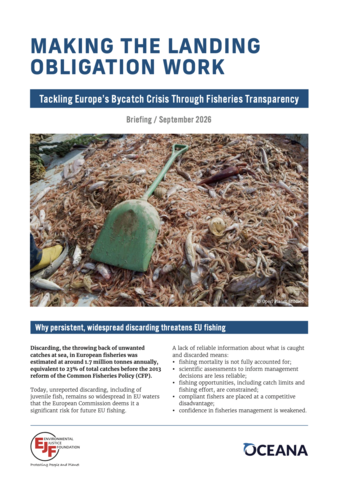
Making the Landing Obligation Work: Tackling Europe’s Bycatch Crisis Through Fisheries Transparency - Summary: The EU’s Landing Obligation (LO) is intended to reduce waste, encourage selective fishing and improve the catch information used to manage populations. For catches within the LO scope, fishers must retain, record and land catches, including bycatch, and count them against quota where applicable, subject to defined exemptions. More than a decade after the obligation was phased in, and seven years after it became fully applicable, these objectives have not been achieved. This is a summary of the longer briefing from EJF and Oceana, which provides a roadmap for ensuring the EU Landing Obligation’s full implementation.
The EU’s Landing Obligation (LO) is intended to reduce waste, encourage selective fishing and improve the catch information used to manage populations. For catches within the LO scope, fishers must retain, record and land catches, including bycatch, and count them against quota where applicable, subject to defined exemptions. More than a decade after the obligation was phased in, and seven years after it became fully applicable, these objectives have not been achieved.
This is a summary of the the longer briefing from EJF and Oceana, which provides a roadmap for ensuring the EU Landing Obligation’s full implementation.
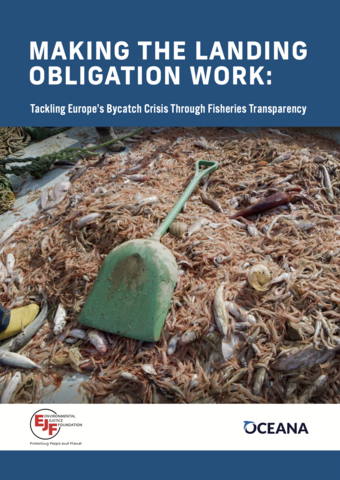
Making the Landing Obligation Work: Tackling Europe’s Bycatch Crisis Through Fisheries Transparency: The EU’s Landing Obligation (LO) is intended to reduce waste, encourage selective fishing and improve the catch information used to manage populations. For catches within the LO scope, fishers must retain, record and land catches, including bycatch, and count them against quota where applicable, subject to defined exemptions. More than a decade after the obligation was phased in, and seven years after it became fully applicable, these objectives have not been achieved. This briefing from EJF and Oceana provides a roadmap for ensuring the EU Landing Obligation’s full implementation.
The EU’s Landing Obligation (LO) is intended to reduce waste, encourage selective fishing and improve the catch information used to manage populations. For catches within the LO scope, fishers must retain, record and land catches, including bycatch, and count them against quota where applicable, subject to defined exemptions. More than a decade after the obligation was phased in, and seven years after it became fully applicable, these objectives have not been achieved.
This briefing from EJF and Oceana provides a roadmap for ensuring the EU Landing Obligation’s full implementation.
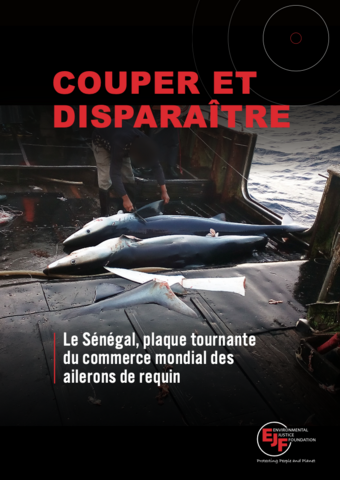
Couper et disparaître: le Sénégal, plaque tournante du commerce mondial des ailerons de requin: Ce rapport met au jour l’ampleur de l’aileronnage des requins à bord de thoniers chinois et taïwanais faisant escale à Dakar, principal port de pêche du Sénégal. S’appuyant sur les témoignages de pêcheurs ayant observé ces pratiques, il révèle que des ailerons de requins étaient régulièrement débarqués à Dakar, où les contrôles portuaires faisaient défaut. Le rapport met également en évidence le risque que du thon issu de navires pratiquant l’aileronnage des requins alimente les chaînes d’approvisionnement mondiales. Le commerce des ailerons de requins reste possible en raison de ces failles de contrôle, qui doivent être comblées de toute urgence.
Ce rapport met au jour l’ampleur de l’aileronnage des requins à bord de thoniers chinois et taïwanais faisant escale à Dakar, principal port de pêche du Sénégal.
S’appuyant sur les témoignages de pêcheurs ayant observé ces pratiques, il révèle que des ailerons de requins étaient régulièrement débarqués à Dakar, où les contrôles portuaires faisaient défaut. Le rapport met également en évidence le risque que du thon issu de navires pratiquant l’aileronnage des requins alimente les chaînes d’approvisionnement mondiales.
Le commerce des ailerons de requins reste possible en raison de ces failles de contrôle, qui doivent être comblées de toute urgence.
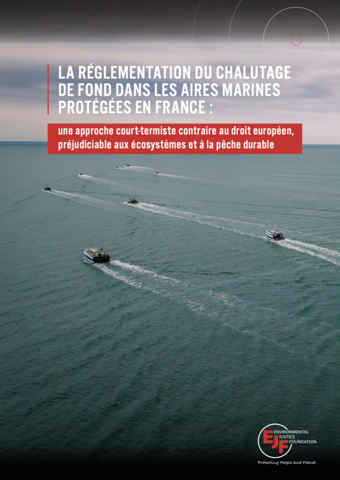
La réglementation du chalutage de fond dans les aires marines protégées en France: L’analyse présentée dans ce rapport révèle des failles structurelles majeures dans la mise en œuvre du droit européen de l’environnement concernant la réglementation de la pêche au chalut de fond dans les aires marines protégées françaises du réseau Natura 2000.
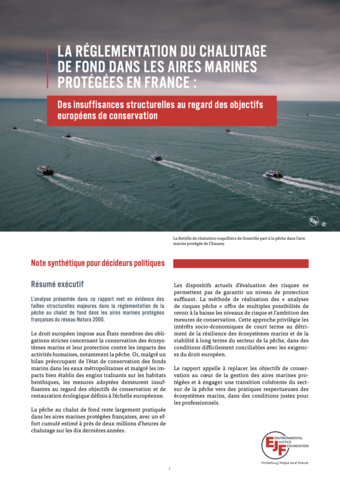
La réglementation du chalutage de fond dans les aires marines protégées en France : Des insuffisances structurelles au regard des objectifs européens de conservation: L’analyse présentée dans ce rapport met en évidence des failles structurelles majeures dans la réglementation de la pêche au chalut de fond dans les aires marines protégées françaises du réseau Natura 2000.
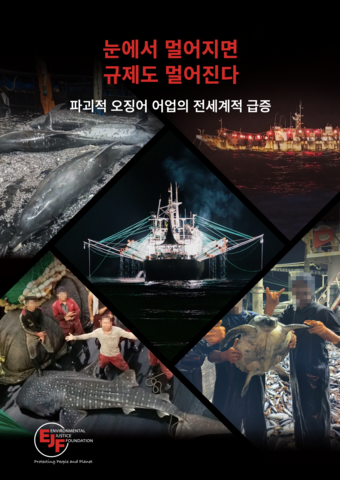
눈에서 멀어지면 규제도 멀어진다: 파괴적 오징어 어업의 전세계적 급증: 본 환경정의재단(EJF)의 글로벌 보고서는 전 세계 오징어의 60%를 공급하는 원양 오징어 선단이 규제 사각지대에서 조업하며 일어나는 강제 노동, 물리적 폭행, 선내 사망과 같은 이슈들의 실태를 고발한다. 한국은 세계적으로 손꼽히는 규모의 원양 오징어 선단을 보유하고 있으며, 최근 몇 년간 수입 오징어 의존도 또한 급격히 높아지고 있다. 기국으로서, 그리고 수입국으로서 한국은 이러한 규제 사각지대의 문제와 결코 무관하지 않다.
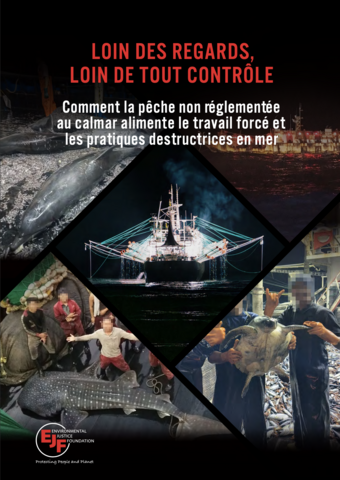
LOIN DES REGARDS, LOIN DE TOUT CONTRÔLE: Comment la pêche non réglementée au calmar alimente le travail forcé et les pratiques destructrices en mer: Le nouveau rapport mondial de l'Environmental Justice Foundation dévoile ce qui se passe à bord des navires de pêche au calmar en haute mer, qui opèrent en dehors de tout contrôle : travail forcé, violences physiques et décès en mer dans des pêcheries qui fournissent 60 % du calmar mondial. L'Union européenne est le premier importateur mondial de calmar. Ce qui se passe loin de nos regards a des conséquences ici.
Le nouveau rapport mondial de l'Environmental Justice Foundation dévoile ce qui se passe à bord des navires de pêche au calmar en haute mer, qui opèrent en dehors de tout contrôle : travail forcé, violences physiques et décès en mer dans des pêcheries qui fournissent 60 % du calmar mondial.
L'Union européenne est le premier importateur mondial de calmar. Ce qui se passe loin de nos regards a des conséquences ici.