
環境正義基金會 氣候金融政策簡報: 本簡報闡述了為何氣候金融是改革全球經濟體系的基礎。本簡報援引2024年發表於《自然》(Nature)期刊的研究指出,若現在投入6兆美元用於減緩措施,便能確保未來符合《巴黎協定》目標,並使最貧困地區免於遭受最嚴重的收入損失。這個金額僅佔「不採取行動」情形下所將產生的38兆美元成本的六分之一。否則,在26年內,北美與歐洲的中位數收入將下降約11%,而南亞與非洲則將下降22%。該研究主張,要彌補減緩、適應以及損失與損害方面的資金缺口,必須提高透明度、制定以氣候為核心的政策、撤資化石燃料,並提供激勵措施,以實現2035年前建立真正的零碳經濟。

EJF’s Policy Brief on Climate Finance: This briefing sets out why climate finance is the foundation for reforming the global economic system. Drawing on 2024 research published in Nature, it shows that investing US$6 trillion in mitigation now, a sixth of the US$38 trillion cost of inaction, would secure a Paris-aligned future and spare the poorest regions the steepest income losses, with median income falling by around 11% in North America and Europe and 22% in South Asia and Africa within 26 years. It argues that closing the mitigation, adaptation and loss and damage finance gaps demands greater transparency, climate-focused policy, divestment from fossil fuels and incentives for a real zero-carbon economy by 2035.
This briefing sets out why climate finance is the foundation for reforming the global economic system. Drawing on 2024 research published in Nature, it shows that investing US$6 trillion in mitigation now, a sixth of the US$38 trillion cost of inaction, would secure a Paris-aligned future and spare the poorest regions the steepest income losses, with median income falling by around 11% in North America and Europe and 22% in South Asia and Africa within 26 years. It argues that closing the mitigation, adaptation and loss and damage finance gaps demands greater transparency, climate-focused policy, divestment from fossil fuels and incentives for a real zero-carbon economy by 2035.

A Manifesto from the Species of the Pantanal: This manifesto calls for urgent action to protect the world's largest tropical wetland, the Pantanal, on behalf of the species that inhabit it. This landmark manifesto has been signed by 16 leading conservation organisations.

Citizen scientists of the sea: The power of fisher inclusion in Ghana's closed season monitoring: Fisher inclusion transforms closed seasons from a top-down directive into a community-driven conservation effort. Sustained engagement and recognition of fisher knowledge are essential to rebuilding Ghana’s fish populations and securing the livelihoods of coastal communities.
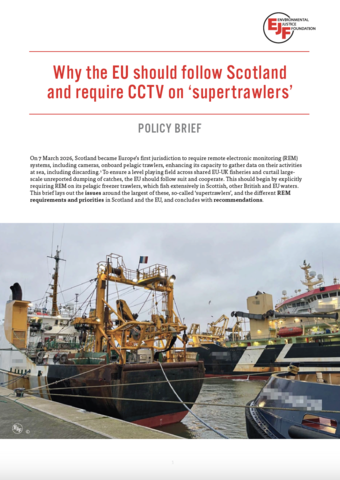
Why the EU should follow Scotland and require CCTV on ‘supertrawlers’: Ten EU-linked freezer trawlers, all of them so-called supertrawlers over 100m long, spent an estimated 14,530 hours fishing in Scottish waters in the 12 months to 1 February 2026. Since 7 March, Scotland has required cameras on board to monitor trawlers in its waters, and the rest of the UK and EU should follow suit.
Ten EU-linked freezer trawlers, all of them so-called supertrawlers over 100m long, spent an estimated 14,530 hours fishing in Scottish waters in the 12 months to 1 February 2026. Since 7 March, Scotland has required cameras on board to monitor trawlers in its waters, and the rest of the UK and EU should follow suit.
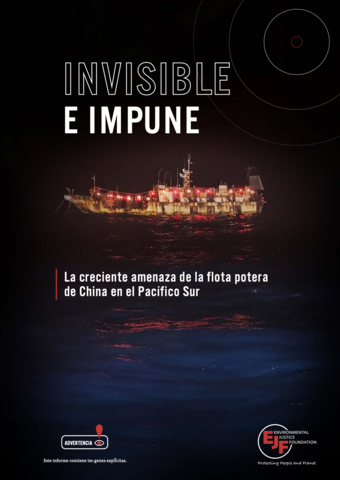
Invisible e impune: La creciente amenaza de la flota calamarera de China en el Pacífico Sur: El informe denuncia el alarmante impacto medioambiental y los abusos de derechos humanos asociados a la flota china de pesca de calamar en alta mar en el Pacífico Sudoriental. El informe recoge investigaciones que revelan prácticas generalizadas de cercenamiento de aletas de tiburones, captura incidental de mamíferos marinos, abusos laborales y el desembarco de tripulantes fallecidos en puertos latinoamericanos. También destaca graves fallos de gobernanza en la pesquería de calamar más importante del mundo. Vea el seminario web en el que debatimos las conclusiones de este informe con expertos: https://www.youtube.com/watch?v=4r0CjrHha2E
El informe denuncia el alarmante impacto medioambiental y los abusos de derechos humanos asociados a la flota china de pesca de calamar en alta mar en el Pacífico Sudoriental. El informe recoge investigaciones que revelan prácticas generalizadas de cercenamiento de aletas de tiburones, captura incidental de mamíferos marinos, abusos laborales y el desembarco de tripulantes fallecidos en puertos latinoamericanos. También destaca graves fallos de gobernanza en la pesquería de calamar más importante del mundo.
Vea el seminario web en el que debatimos las conclusiones de este informe con expertos: https://www.youtube.com/watch?...
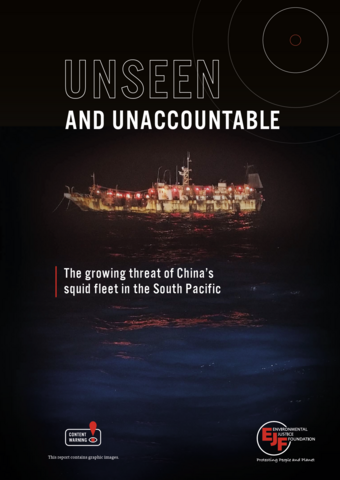
Unseen and unaccountable: The growing threat of China’s squid fleet in the South Pacific: This report exposes the alarming environmental and human rights toll of China’s distant-water squid fleet in the Southeast Pacific. It draws on investigations that reveal widespread shark finning, marine mammal capture, abusive labour practices, and the unloading of deceased crew into Latin American ports. The report also highlights major governance failures: despite early warnings of a decline in the squid population, and calls for urgent reforms to end IUU fishing and forced labour in the world’s most important squid fishery. Watch the webinar where we discuss the findings of this report with experts: https://www.youtube.com/watch?v=4r0CjrHha2E
This report exposes the alarming environmental and human rights toll of China’s distant-water squid fleet in the Southeast Pacific. It draws on investigations that reveal widespread shark finning, marine mammal capture, abusive labour practices, and the unloading of deceased crew into Latin American ports. The report also highlights major governance failures: despite early warnings of a decline in the squid population, and calls for urgent reforms to end IUU fishing and forced labour in the world’s most important squid fishery.
Watch the webinar where we discuss the findings of this report with experts: https://www.youtube.com/watch?...
Letter to Commissioner Kadis: Staying your course on combating IUU fishing by delivering digital and dissuasive fisheries control: This letter urges European Commissioner for Fisheries and Oceans Costas Kadis to stick to his commitments to focus on the “gradual but timely and full implementation of the revised fisheries control system”, which includes CATCH and the Fisheries Control Regulation, to deliver on Europe’s zero-tolerance to illegal, unreported and unregulated fishing.
This letter urges European Commissioner for Fisheries and Oceans Costas Kadis to stick to his commitments to focus on the “gradual but timely and full implementation of the revised fisheries control system”, which includes CATCH and the Fisheries Control Regulation, to deliver on Europe’s zero-tolerance to illegal, unreported and unregulated fishing.
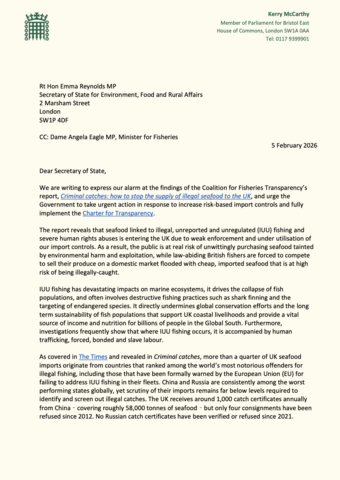
Parliamentary letter on UK's seafood imports: In this letter to Emma Reynolds MP (Secretary of State at the Department of Environment, Food and Rural Affairs) and Dame Angela Eagle MP (Minister for Fisheries), over 40 parliamentarians express their alarm at the ongoing failure to adequately scrutinise the UK’s seafood imports and the risk this poses to consumers, fishers and the marine environment. They urge the environment and fisheries ministers to take action to strengthen the UK’s import control system, to prevent the country from becoming a dumping ground for illegal and slave-caught seafood.
In this letter to Emma Reynolds MP (Secretary of State at the Department of Environment, Food and Rural Affairs) and Dame Angela Eagle MP (Minister for Fisheries), over 40 parliamentarians express their alarm at the ongoing failure to adequately scrutinise the UK’s seafood imports and the risk this poses to consumers, fishers and the marine environment. They urge the environment and fisheries ministers to take action to strengthen the UK’s import control system, to prevent the country from becoming a dumping ground for illegal and slave-caught seafood.
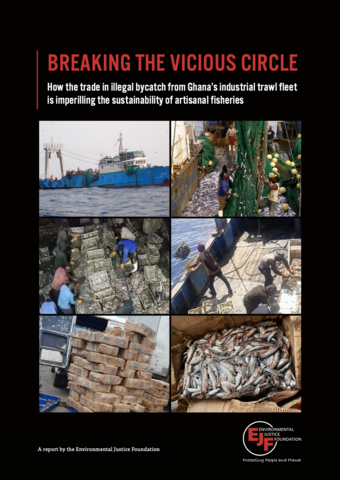
Breaking the vicious circle: How the trade in illegal bycatch from Ghana’s industrial trawl fleet is imperilling the sustainability of artisanal fisheries: Populations of small pelagic fish traditionally caught by artisanal fishers in Ghanaian waters are severely overfished and in a state of collapse. The alarming state of Ghana’s small pelagic fisheries results in part from persistent illegal, unreported and unregulated fishing by the largely foreign-owned industrial trawl fleet. The use of illegal fishing gear by trawlers results in large volumes of bycatch, known locally as logo fish - juvenile and undersized fish which are either discarded or sold to coastal communities for profit. Urgent action is needed to break this vicious circle and ensure a more sustainable and equitable future for Ghana’s fisheries.
Populations of small pelagic fish traditionally harvested by artisanal fishers in Ghanaian waters are severely overfished and in a state of collapse. The alarming state of Ghana’s small pelagic fisheries results in part from persistent illegal, unreported and unregulated fishing by the largely foreign-owned industrial trawl fleet. The use of illegal fishing gear by trawlers results in large volumes of bycatch, known locally as logo fish - juvenile and undersized fish which are either discarded or sold to coastal communities for profit.
Urgent action is needed to break this vicious circle and ensure a more sustainable and equitable future for Ghana’s fisheries.
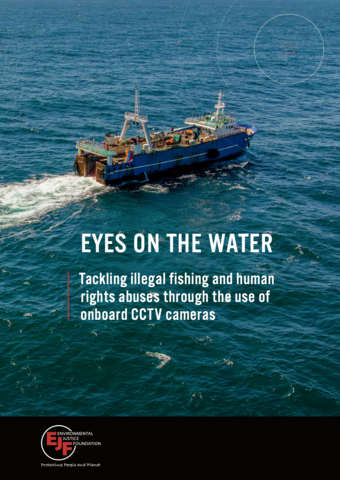
Eyes on the water: Tackling illegal fishing and human rights abuses through the use of onboard CCTV cameras: Illegal, unreported and unregulated (IUU) and unsustainable fishing places immense pressure on the world’s oceans. These destructive practices go hand in hand with human rights violations and labour abuses. A major challenge in effectively tackling these issues is that much of this harmful activity occurs in the middle of the ocean, where it is easier to avoid detection. The findings of this report show that the adoption of fleet-wide CCTV, as a key tool within broader monitoring, control and surveillance systems, has massive potential to enhance transparency, tackle IUU fishing, and address human rights abuses at sea.
Illegal, unreported and unregulated (IUU) and unsustainable fishing places immense pressure on the world’s oceans. These destructive practices go hand in hand with human rights violations and labour abuses. A major challenge in effectively tackling these issues is that much of this harmful activity occurs in the middle of the ocean, where it is easier to avoid detection.
The findings of this report show that the adoption of fleet-wide CCTV, as a key tool within broader monitoring, control and surveillance systems, has massive potential to enhance transparency, tackle IUU fishing, and address human rights abuses at sea.
Lifting the veil: Evaluating transparency in Ghana's fisheries sector: Illegal fishing and overfishing risk the collapse of Ghana’s fish populations, directly undermining the most basic human rights of coastal communities, and costing the country millions of dollars every year. Greater transparency is needed to achieve sustainable, legal, and ethical fisheries. This analysis aims to inform and guide this action, and to assist Ghana in moving from commitment to the Global Charter to full implementation, ensuring that the benefits of transparency are secured for the many Ghanaians who depend on fisheries resources for their livelihoods.
Illegal fishing and overfishing risk the collapse of Ghana’s fish populations, directly undermining the most basic human rights of coastal communities, and costing the country millions of dollars every year. Greater transparency is needed to achieve sustainable, legal, and ethical fisheries.
This analysis aims to inform and guide this action, and to assist Ghana in moving from commitment to the Global Charter to full implementation, ensuring that the benefits of transparency are secured for the many Ghanaians who depend on fisheries resources for their livelihoods.