
Policy brief : The legal case for an effective GFCM compliance mechanism: The legal analysis by Professor Tullio Scovazzi and Professor Simone Vezzani of the GFCM’s legal framework, applicable international law, and existing compliance regimes of other Regional Fisheries Management Organisations (RFMOs) indicates that the reasons for this gap are of a political, not legal, nature.
The legal analysis by Professor Tullio Scovazzi and Professor Simone Vezzani of the GFCM’s legal framework, applicable international law, and existing compliance regimes of other Regional Fisheries Management Organisations (RFMOs) indicates that the reasons for this gap are of a political, not legal, nature.
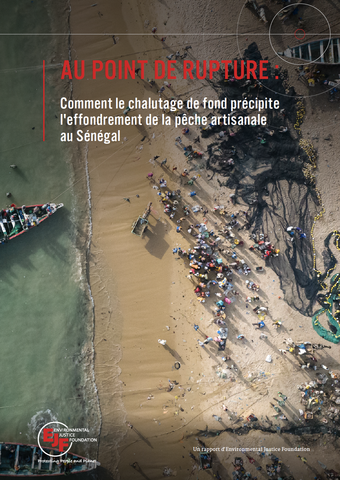
Au point de rupture: comment le chalutage de fond précipite l'effondrement de la pêche artisanale au Sénégal: Les pratiques de pêche destructrices de l'environnement et non durables pratiquées par la flotte chalutière aggravent la crise du secteur de la pêche artisanale au Sénégal.
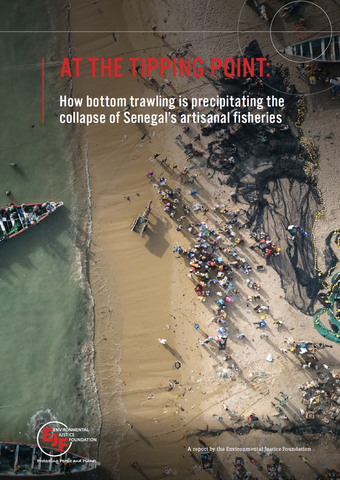
At the tipping point: how bottom trawling is precipitating the collapse of Senegal’s artisanal fisheries: Artisanal fishing communities are the beating heart of Senegal’s fisheries sector, yet they are under threat. This report documents the environmental and socio-economic impacts of bottom trawling in Senegal.
Briefing: Schädliche Umweltauswirkungen im EU-Lieferkettengesetz – Fallbeispiel: IUU-Fischerei: Dieses Briefing zeigt anhand des Beispiels der illegalen, unregulierten und nicht gemeldeten (IUU-)Fischerei, dass eine weit gefasste Definition schädlicher Umweltauswirkungen im EU-Lieferkettengesetz dazu beitragen kann, besonders schädliche Auswirkungen der Fischerei auf die Umwelt zu verhindern und die Nachhaltigkeit in diesem Sektor zu fördern.
Dieses Briefing zeigt anhand des Beispiels der illegalen, unregulierten und nicht gemeldeten (IUU-)Fischerei, dass eine weit gefasste Definition schädlicher Umweltauswirkungen im EU-Lieferkettengesetz dazu beitragen kann, besonders schädliche Auswirkungen der Fischerei auf die Umwelt zu verhindern und die Nachhaltigkeit in diesem Sektor zu fördern. Gleichzeitig kann dieser Ansatz Rechtsunsicherheiten beseitigen, gleiche Wettbewerbsbedingungen fördern und europäischen Unternehmen mehr Klarheit darüber verschaffen, welche negativen Auswirkungen ihre Aktivitäten auf die Umwelt und die Meere haben.
Das Briefing empfiehlt darüber hinaus eine Einteilung in folgende Kategorien: Klimawandel, Verlust der biologischen Vielfalt, Verschmuztung von Luft, Wasser und Böden, Schädigung von Land-, Meeres- und Süßwasserökosystemen, Entwaldung und übermäßiger Ressourcenverbrauch (z.B. Wasser, Energie).
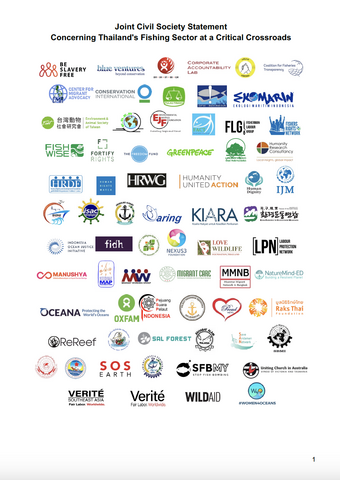
Joint Civil Society Statement Concerning Thailand's Fishing Sector at a Critical Crossroads: The Royal Thai Government’s progress to date in achieving a sustainable, legal, and ethical Thai fishing sector is commendable. However, rolling back reforms now would pose risks to Thailand and its fishing industry, especially when the global community is moving toward greater transparency and accountability in the seafood industry.
The Royal Thai Government’s progress to date in achieving a sustainable, legal, and ethical Thai fishing sector is commendable. However, rolling back reforms now would pose risks to Thailand and its fishing industry, especially when the global community is moving toward greater transparency and accountability in the seafood industry.
แถลงการณ ์ ร่วมภาคประชาสงัคม เรื7องภาคประมงของไทยในช่วงหวัเลีAยวหวัต่อ: ความก้าวหน้าของรัฐบาลไทยในการบรรลุภาคประมงไทยที่ยั่งยืน ถูกกฎหมาย และมีจริยธรรม เป็นสิ่งที่น่ายกย่อง อย่างไรก็ตาม การปฏิรูปถอยหลังในช่วงหัวเลี้ยวหัวต่อที่สำคัญนี้อาจก่อให้เกิดความเสี่ยงร้ายแรงต่อประเทศไทยและอุตสาหกรรมประมง โดยเฉพาะอย่างยิ่งเมื่อประชาคมโลกกำลังมุ่งสู่ความโปร่งใสและความรับผิดชอบในอุตสาหกรรมอาหารทะเลมากขึ้น
ความก้าวหน้าของรัฐบาลไทยในการบรรลุภาคประมงไทยที่ยั่งยืน ถูกกฎหมาย และมีจริยธรรม เป็นสิ่งที่น่ายกย่อง อย่างไรก็ตาม การปฏิรูปถอยหลังในช่วงหัวเลี้ยวหัวต่อที่สำคัญนี้อาจก่อให้เกิดความเสี่ยงร้ายแรงต่อประเทศไทยและอุตสาหกรรมประมง โดยเฉพาะอย่างยิ่งเมื่อประชาคมโลกกำลังมุ่งสู่ความโปร่งใสและความรับผิดชอบในอุตสาหกรรมอาหารทะเลมากขึ้น
Enabling action in cases of systemic forced labour: As part of the setting up of an EU framework to combat forced labour, Europêche and the Environmental Justice Foundation - having a joint objective of securing sustainable and human rights abuse free fisheries - encourage Members of the European Parliament to enable the EU to take measures in cases where forced labour practices are systemic.
As part of the setting up of an EU framework to combat forced labour, Europêche and the Environmental Justice Foundation - having a joint objective of securing sustainable and human rights abuse free fisheries - encourage Members of the European Parliament to enable the EU to take measures in cases where forced labour practices are systemic.
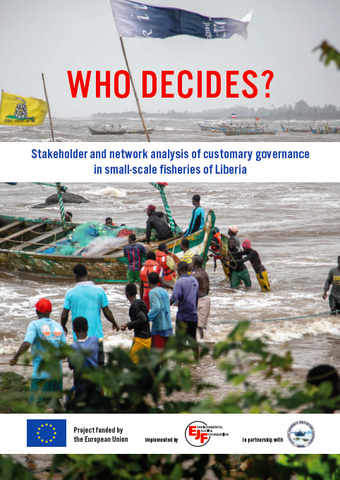
Who decides? Stakeholder and network analysis of customary governance in small-scale fisheries of Liberia: The small-scale fisheries sector in Liberia relies on informal governance structures with multiple stakeholders at different leadership levels. This report analyses how these structures play an important role in addressing issues like overexploitation and unsustainable fishing practices.
The small-scale fisheries sector in Liberia relies on informal governance structures with multiple stakeholders at different leadership levels. This report analyses how these structures play an important role in addressing issues like overexploitation and unsustainable fishing practices.
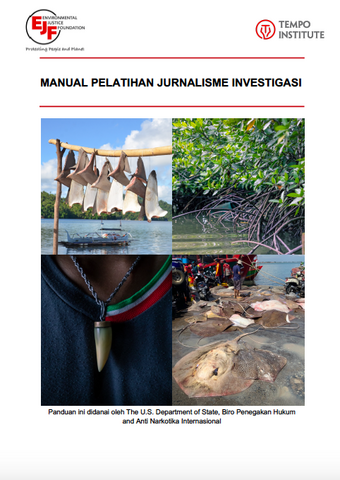
Manual pelatihan jurnalisme investigasi: EJF dan Tempo Institute melalui manual ini bermaksud untuk membagikan metodologi dan teknik-teknik yang baik atau praktik terbaik dalam melakukan investigasi berbasis lapangan terhadap kejahatan-kejahatan lingkungan di Indonesia, serta menginspirasi generasi jurnalis muda berikutnya untuk menaruh minat pada pendokumentasian dan pelaporan isu-isu lingkungan.
EJF dan Tempo Institute melalui manual ini bermaksud untuk membagikan metodologi dan teknik-teknik yang baik atau praktik terbaik dalam melakukan investigasi berbasis lapangan terhadap kejahatan-kejahatan lingkungan di Indonesia, serta menginspirasi generasi jurnalis muda berikutnya untuk menaruh minat pada pendokumentasian dan pelaporan isu-isu lingkungan.
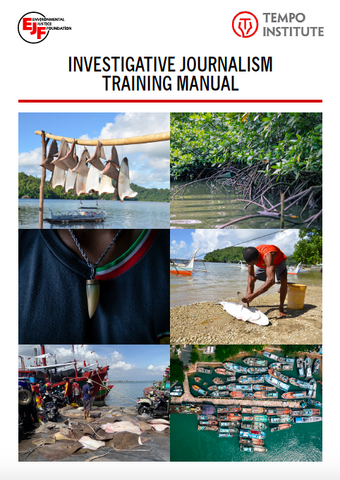
Investigative journalism training manual: EJF and TEMPO Institute intend for this manual to share good or best practice methodologies and techniques for conducting field-based investigations into environmental crimes in Indonesia, as well as to inspire the next generation of young journalists to take an interest in documenting and reporting on environmental issues.
EJF and TEMPO Institute intend for this manual to share good or best practice methodologies and techniques for conducting field-based investigations into environmental crimes in Indonesia, as well as to inspire the next generation of young journalists to take an interest in documenting and reporting on environmental issues.
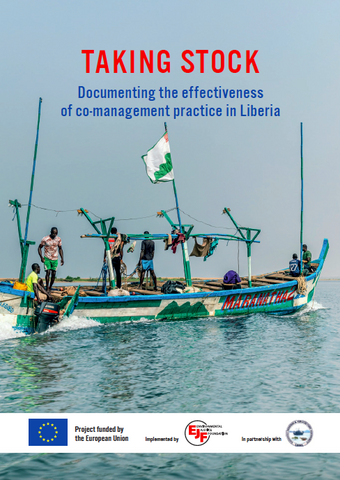
Taking stock: documenting the effectiveness of co-management practice in Liberia: This report uses the experiences of the Grand Cape Mount County Collaborative Management Association to present the challenges, achievements, and lessons learned from practising co-management in Liberia.